
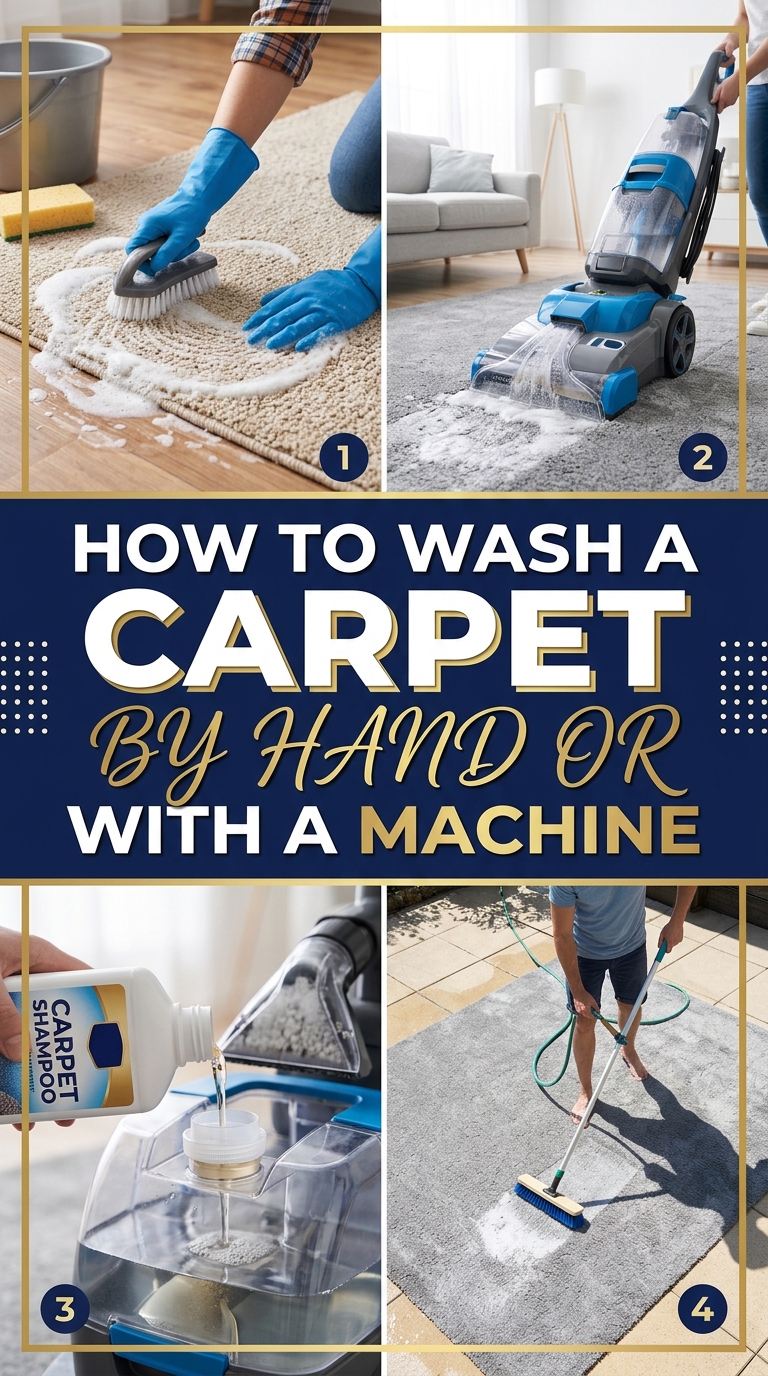
Walking barefoot across a carpet that has lost its fluff feels like a chore rather than a comfort. When the fibers become matted with dust and the colors look dull, it is time to restore the fabric to its original state. To wash a carpet by hand or with a machine, you must first vacuum thoroughly, apply a targeted cleaning solution, and then carefully extract the moisture to prevent mold. Manual scrubbing works best for small spills and delicate rugs, while machine extraction provides the deep-cleaning power required for high-traffic rooms and wall-to-wall carpeting.
| Product | Best For | Key Features | Pros | Cons |
|---|---|---|---|---|
| Bissell Big Green Professional | Whole-House Deep Cleaning | Large tanks, XL brush roll, professional-grade suction. | Incredible cleaning depth; very durable. | Heavy and difficult to store. |
| Hoover SmartWash+ Automatic | Ease of Use | Automatic wash and dry cycles; motion-sensing technology. | No triggers to pull; dries carpets quickly. | Tank requires frequent emptying. |
| Bissell Little Green Portable | Stairs and Small Spots | Compact design, 48-ounce tank, specialized tough stain tool. | Extremely portable; great for cars. | Not for large floor areas. |
| Rug Doctor Pet TruDeep | Pet Owners | Dual brush technology, specialized pet formula, high suction. | Removes deep odors; high-quality build. | Bulkier than average cleaners. |
| Black+Decker Spillbuster | Quick Messes | Cordless design, handheld, easy-to-clean collection bowl. | Perfect for spills; very easy to clean. | Lower suction than corded units. |
1. Bissell Big Green Professional Carpet Cleaner
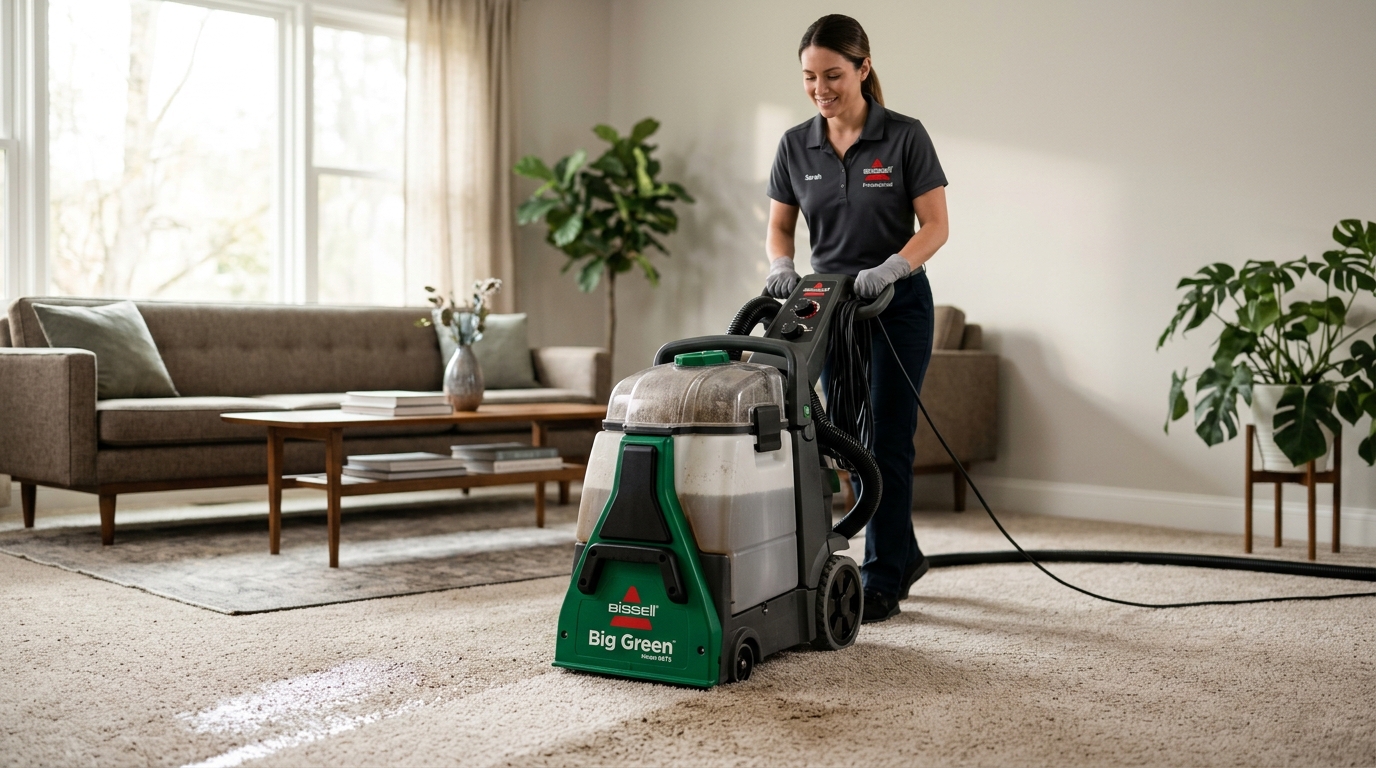
The Bissell Big Green is the gold standard for residential carpet cleaning, offering the same level of performance you would expect from a heavy-duty rental unit. Most homeowners struggle with machines that merely wet the carpet without pulling the grime out from the backing. This machine solves that by utilizing a massive, motorized brush roll and a vacuum motor that generates significantly more lift than entry-level models. It turns a weekend project into a professional restoration job, ensuring that the deep-seated allergens and dirt are actually removed rather than just shifted around.
Performance & Build Quality
The build quality of the Big Green is industrial. It uses heavy-duty plastics and thick rubber seals that do not crack or leak over time. The dual-tank system is a standout feature, keeping the clean water and the dirty water completely separated so you never cycle gray water back into your fibers. The cleaning path is wide, which reduces the number of passes you need to make across a large living room. It feels solid and planted, which translates to better agitation of the carpet pile and more consistent water recovery.
Real-World Experience
In a typical home scenario, such as cleaning a high-traffic hallway after a rainy season, the Big Green excels by pulling up water that looks almost black, even when the carpet looks “clean” to the eye. Users frequently report that the carpet feels noticeably softer and “springier” once dry because the machine removes the sticky residues that cause fibers to clump together. A common complaint is the weight; at over 40 pounds when full, it is a workout to move between floors. However, the results are so superior to smaller units that most owners find the physical effort worth the trade-off. It is the kind of tool that you buy once and keep for a decade.
Ease of Use & Value for Money
While the machine is heavy, the operation is straightforward. There are no complicated settings or digital screens to navigate. You fill it, you push it, and you empty it. The value comes from the savings over time; if you have 1,500 square feet of carpet, this machine pays for itself in just three uses compared to the cost of professional services. The long hose attachment makes cleaning stairs or upholstery manageable, though the main unit will likely stay at the base of the stairs due to its size.
Who Should Buy It (and Who Should Skip)
Choose the Bissell Big Green if you have a large home with wall-to-wall carpeting and you want the most powerful suction available. It is the best choice for those who are tired of replacing cheap plastic cleaners every few years. Skip this model if you live in a small apartment with limited storage or if you have physical limitations that make pushing a 42-pound machine difficult. For small rugs or occasional spots, this is likely more machine than you need.
Overall Verdict
This is the most capable residential carpet cleaner on the market, built for those who prioritize raw cleaning power and longevity over portability. If you want your carpets to look and feel professionally cleaned without the recurring service fees, this is the investment to make.
Investing in the Big Green removes the uncertainty of whether your carpets are truly clean, providing a deeper level of hygiene that lightweight machines simply cannot match.
2. Hoover SmartWash+ Automatic Carpet Cleaner
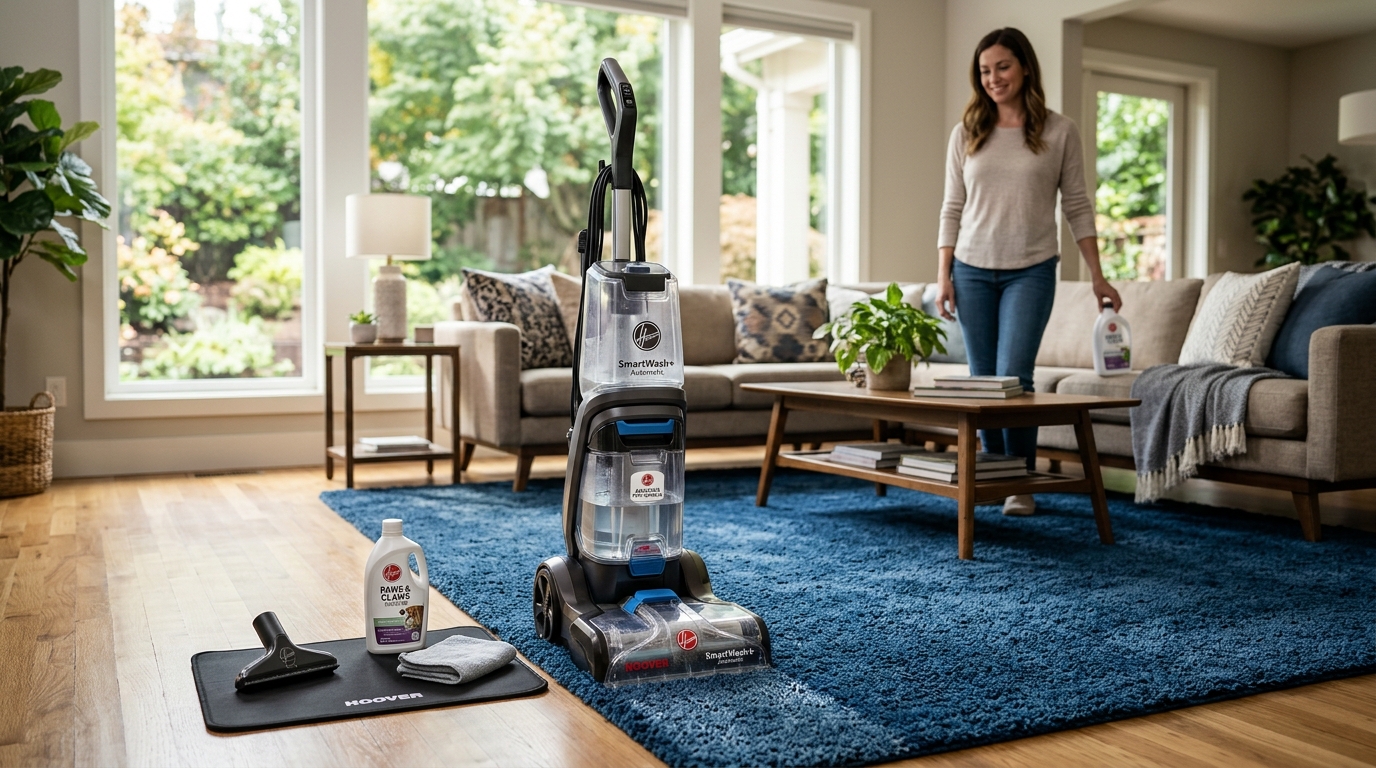
The Hoover SmartWash+ is designed for people who find the traditional “spray and extract” trigger mechanism of carpet cleaners frustrating or confusing. It operates much like a standard upright vacuum: when you push it forward, it automatically mixes solution and washes the carpet, and when you pull it back, it automatically switches to a drying mode. This eliminates the risk of over-saturating the carpet, which is the number one cause of mold and long-term fiber damage in DIY cleaning projects.
Performance & Build Quality
The build is focused on lightness and maneuverability. While it uses more plastic components than industrial models, the parts are well-fitted and the design is ergonomic. The FlexForce PowerBrushes are designed to reach deep into the carpet pile to lift out dirt while remaining gentle on the fibers. The suction is adequate for most residential needs, though it does not reach the industrial levels of the Big Green. The separate solution tank automatically mixes the right ratio of water and soap, which is a significant convenience feature.
Real-World Experience
Imagine a busy Saturday morning where you need to clean the living room before guests arrive. The SmartWash+ is the ideal tool here because it is fast and the “Dry Only” mode helps the carpet dry in about a quarter of the time of other machines. Owners often mention how much they appreciate not having to hold down a trigger, which can lead to hand fatigue in larger rooms. A common complaint is that the dirty water tank is smaller than expected, requiring frequent trips to the sink. However, the ease of simply pushing and pulling makes it feel like less of a chore overall.
Ease of Use & Value for Money
This machine offers excellent value for the average household. It is intuitive enough for a first-time user to pick up and use without reading a lengthy manual. The auto-dry feature is the biggest selling point, as it uses heat-force technology to blow warm air directly onto the carpet. This reduces the “wet dog” smell that often lingers after cleaning. For the price, it provides a very modern, tech-forward experience that makes carpet maintenance feel much less intimidating.
Who Should Buy It (and Who Should Skip)
This is the best choice for busy families or elderly users who need a lightweight, automated solution that doesn’t require manual coordination. It is perfect for those who clean their carpets frequently and want them dry as fast as possible. Skip it if you are looking for a heavy-duty machine for severely neglected, deeply stained carpets in a commercial environment, as the tanks are not large enough for high-volume work.
Overall Verdict
Hoover has succeeded in making carpet cleaning as simple as vacuuming. The automation features prevent the most common user errors, ensuring a safe and effective clean every time. It is a smart, balanced choice for the modern home.
If you want a machine that does the thinking for you and gets your floors dry before dinner, the SmartWash+ is the most stress-free option available today.
3. Bissell Little Green Portable Carpet Cleaner
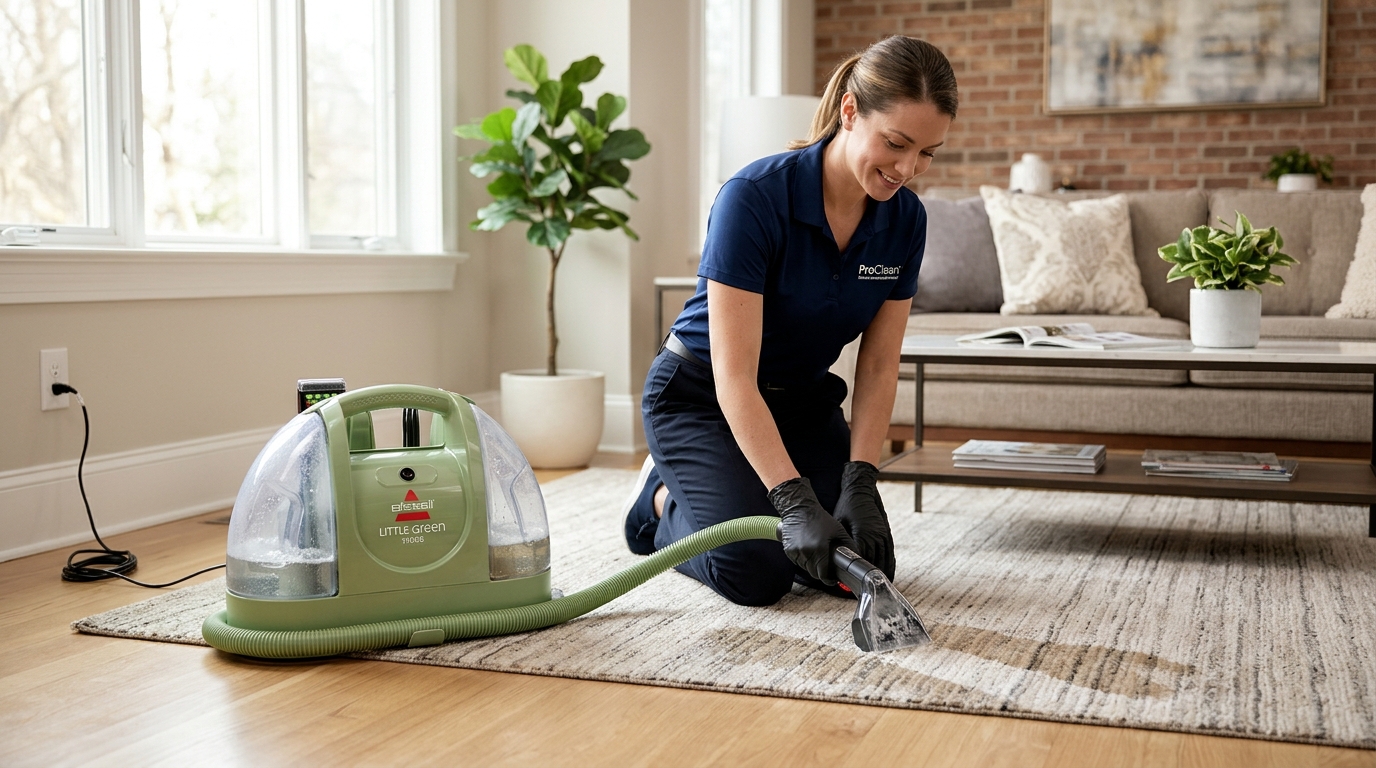
The Bissell Little Green is the definitive solution for the “small mess” problem that doesn’t warrant dragging out a full-sized machine. It is a compact, handheld extractor designed specifically for stairs, upholstery, and the inevitable spills that happen in a household with children or pets. Its greatest strength lies in its portability; it can be tucked away in a small closet or under a sink, ready to be deployed the moment a glass of red wine hits the rug or a muddy paw print appears on the sofa.
Performance & Build Quality
Despite its small stature, the Little Green has a surprisingly robust motor. It uses a 3-inch tough stain tool that combines spray, scrub, and suction into one handheld head. The tanks are small but easy to fill and empty. The build is simple and functional, using thick plastic that can withstand being bumped around in a garage or car trunk. It is not designed for “scrubbing” an entire room, but for its intended purpose of spot cleaning, the suction is concentrated and highly effective.
Real-World Experience
In a scenario like cleaning a car’s interior, the Little Green is unmatched. The long power cord and flexible hose allow you to reach into tight footwells and under seats where a full-sized machine could never go. Users frequently report that it is their go-to tool for refreshing the high-traffic spots on their couch or the edges of carpets near baseboards. A common complaint is that the hose can be difficult to clean internally, which can lead to odors if not rinsed thoroughly. However, owners praise the “satisfaction factor” of seeing the dark, dirty water accumulate in the clear tank after just a few passes.
Ease of Use & Value for Money
This is arguably the best value-for-money carpet tool on the market because it is used more frequently than a large upright. It costs a fraction of a full-sized cleaner and serves a different, arguably more common, need. It is extremely easy to use: fill the tank with warm water and formula, plug it in, and you are ready. Because it is so light, it is the only viable option for cleaning a full flight of carpeted stairs without risking a fall.
Who Should Buy It (and Who Should Skip)
This is a must-have for apartment dwellers, pet owners, and car enthusiasts. It is the perfect companion for anyone who already has a vacuum but needs something for liquid spills. Skip this if you are looking to clean large open floor plans or entire bedrooms; using this on a whole room would be back-breaking and take hours because of the small cleaning head.
Overall Verdict
The Little Green is a legendary tool for a reason. It is specialized, effective, and perfectly sized for the small accidents of daily life. It is the most practical cleaning tool you can own for targeted maintenance.
Stop worrying about permanent stains from small spills; having the Little Green on hand means you can resolve accidents in minutes rather than living with them forever.
4. Rug Doctor Pet TruDeep Carpet Cleaner
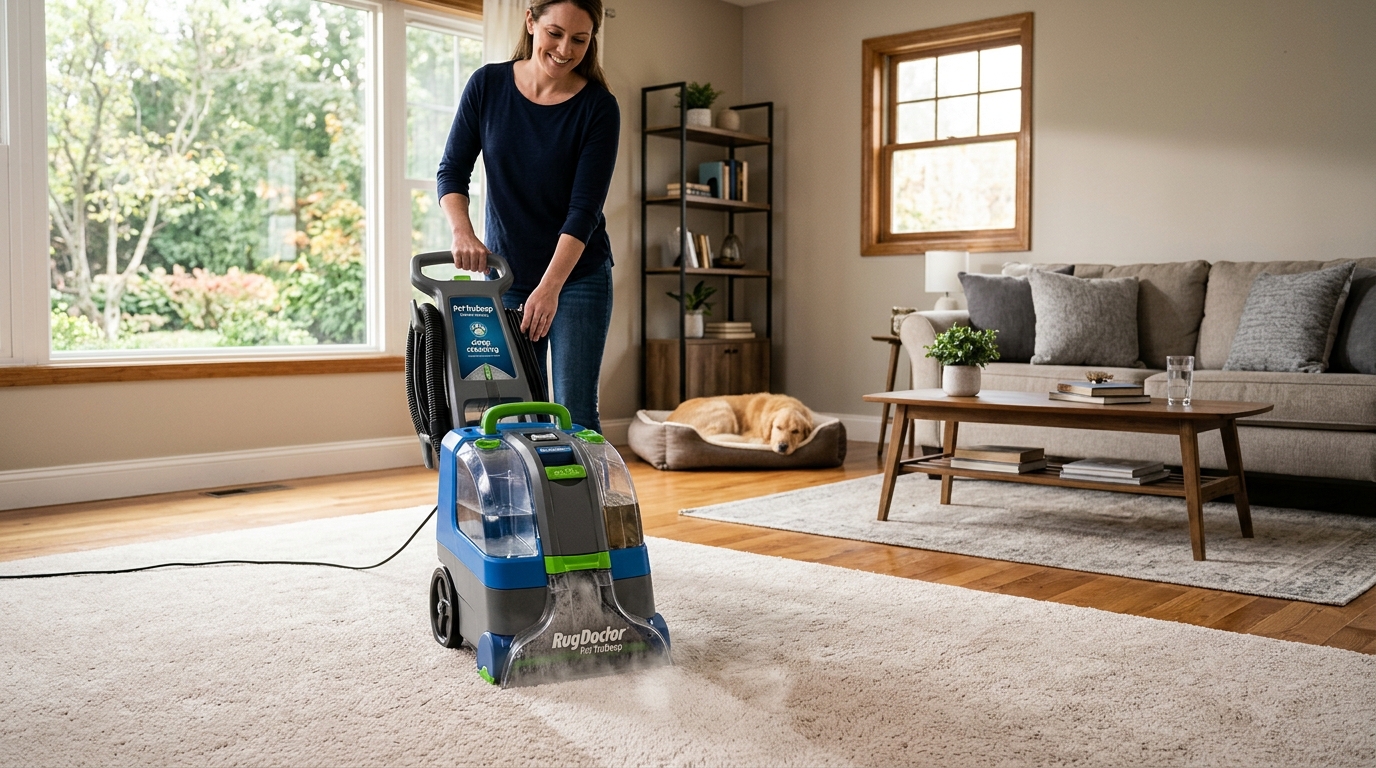
The Rug Doctor Pet TruDeep is an aggressive cleaning machine built specifically to tackle the unique challenges of pet-owning households. Pet urine and dander are notoriously difficult to remove because they sink deep into the carpet backing, often staying wet long after the surface feels dry. This machine utilizes “TruDeep” suction and a specialized brush system to reach those lower layers. It is designed to be more than just a cleaner; it is an odor-elimination system for homes where pets are part of the family.
Performance & Build Quality
The performance is characterized by its “Super Boost” spray mode, which allows you to deliver extra cleaning solution to particularly stubborn spots. The dual cross-action brushes oscillate to scrub every side of the carpet fiber, ensuring that hair and debris are physically loosened. The build is heavy-duty and feels more like a piece of machinery than a home appliance. It includes a specialized pet upholstery tool that is remarkably effective at removing embedded pet hair from furniture.
Real-World Experience
For a family with two large dogs, this machine is a life-saver during the shedding season or when an older pet has an accident. Owners often mention that the suction is strong enough to pull up pet hair that their standard vacuum missed. A common complaint is the noise level; it is a very loud machine, which can be stressful for some pets. However, the trade-off is a carpet that actually smells fresh rather than just “perfumed.” The machine is also quite bulky, making it a bit clumsy in tight spaces, but its ability to remove deep-set biological stains is virtually unrivaled in the consumer market.
Ease of Use & Value for Money
The TruDeep is slightly more complex to use than a standard Hoover, but the results justify the learning curve. The tanks are large, which reduces the “down time” spent at the sink. In terms of value, it sits in the mid-to-high range, but for a pet owner who might otherwise have to replace carpets prematurely due to odors, it is a highly cost-effective investment. The inclusion of the pet-specific cleaning tools adds significant value to the package.
Who Should Buy It (and Who Should Skip)
This is the definitive choice for households with multiple pets, heavy shedding, or frequent accidents. If you prioritize odor removal above all else, this is your machine. Skip it if you do not have pets or if you live in a very quiet environment where the high decibel levels would be a major nuisance. For a “pet-free” home, the Bissell Big Green or Hoover SmartWash+ might be more pleasant to use.
Overall Verdict
Rug Doctor has brought their commercial expertise to the home with a focus on biological messes. It is a powerful, rugged machine that wins the war against pet odors and deep stains. It is a specialized tool for a specific, demanding job.
Choosing the Pet TruDeep ensures your home remains a welcoming space for both your guests and your pets, effectively removing the biological traces that other machines leave behind.
5. Black+Decker Spillbuster Cordless Carpet Cleaner
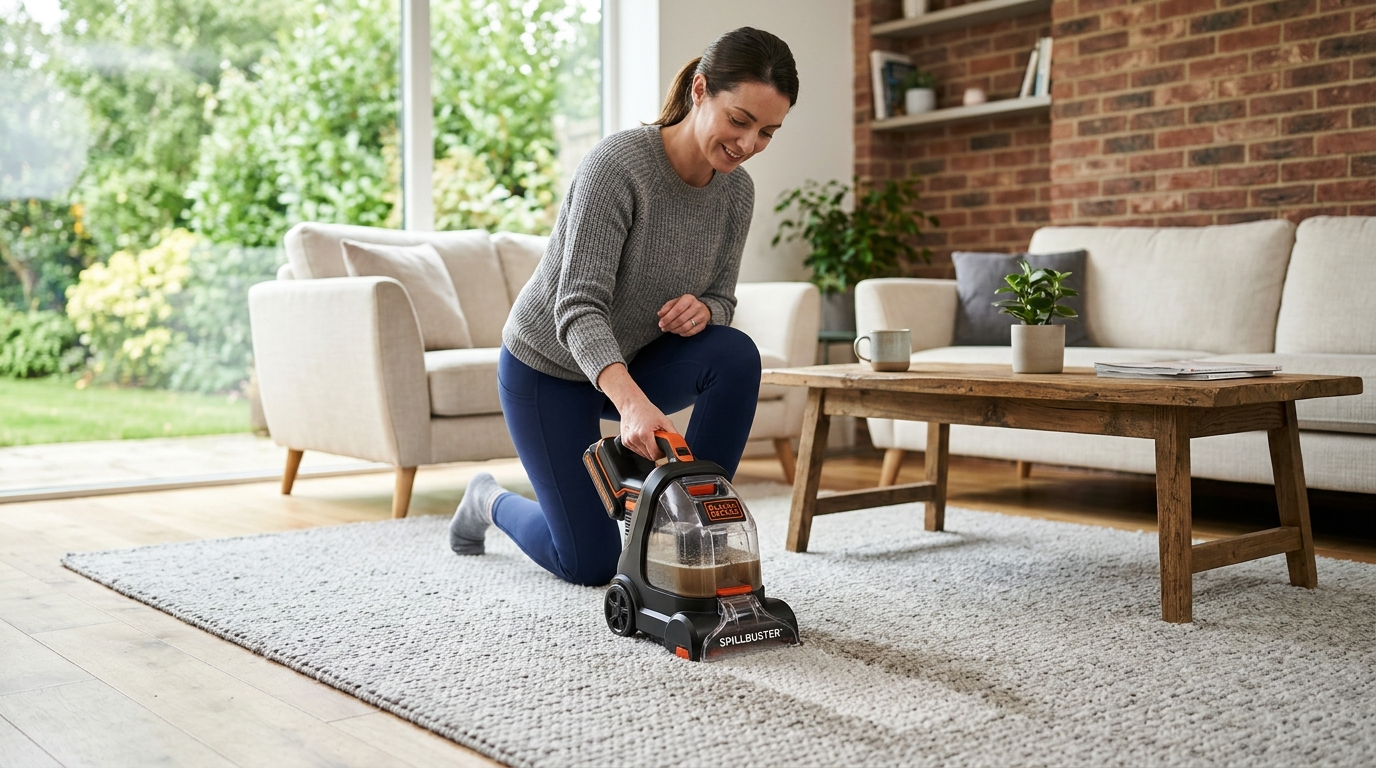
The Black+Decker Spillbuster is a niche tool designed for the immediate “oh no” moments of daily life. Unlike every other machine on this list, it is cordless, meaning you don’t have to hunt for an outlet while a spill is soaking into your rug. It is a handheld device that acts as a wet vacuum with a built-in scrubbing brush. It is not meant for deep cleaning or large areas; it is an “emergency response” tool for spilled cereal, dropped coffee, or fresh mud tracked in by a toddler.
Performance & Build Quality
The performance is centered on speed and convenience rather than raw power. It features a wide nozzle for picking up chunky messes (like soggy cereal) and a separate spray function for liquid stains. The build is lightweight and easy to hold with one hand. The collection bowl is dishwasher safe, which is a brilliant design choice because it makes the post-cleaning cleanup incredibly easy. The battery life is sufficient for several small spots, though it won’t last for a marathon cleaning session.
Real-World Experience
Imagine a scenario where a child spills a bowl of milk and cereal on the rug. Normally, you’d be blotting with paper towels for twenty minutes. With the Spillbuster, you can vacuum up the solids and liquids in seconds, then spray and scrub the remaining residue. Users frequently report that this is the best tool they’ve ever owned for “daily maintenance.” A common complaint is that the suction is not strong enough for deep-pile carpets or old, dried-in stains. It is definitely a “fresh spill” specialist. However, the ease of just grabbing it and going makes it much more likely to be used immediately, which prevents stains from setting in the first place.
Ease of Use & Value for Money
This is the easiest machine to use on the list. There are no hoses to tangle and no heavy tanks to lug. The value is found in the time saved and the prevention of permanent stains. It is priced very affordably, making it an excellent “second” cleaning tool to have in addition to a full-sized vacuum. It’s especially valuable for those with young children where daily spills are a statistical certainty.
Who Should Buy It (and Who Should Skip)
This is for the parent of small children, the person who drinks coffee over their carpet, or someone who wants a quick way to clean up after a small pet. Skip this if you need to clean an entire rug, or if you are dealing with stains that have been there for weeks. This is a “first responder,” not a deep-cleaner.
Overall Verdict
The Spillbuster is a clever, convenient invention that bridges the gap between a paper towel and a full-sized carpet cleaner. It is the best tool for stopping a mess before it becomes a permanent stain. It is a small investment for a lot of peace of mind.
By having the Spillbuster ready to go, you can stop small accidents from ruining your expensive rugs before the liquid even has a chance to soak in.
How do you wash a carpet by hand effectively?
To wash a carpet by hand, you should use a mixture of mild dish soap and warm water, applying it with a soft-bristle brush in gentle circular motions. After scrubbing, blot the area with a clean, dry microfiber cloth to remove as much moisture as possible, then rinse with a damp cloth to remove soap residue. Hand washing is the safest method for delicate natural fibers like wool or silk, as it prevents the mechanical stress and high-heat extraction that can cause shrinking or fraying.
The key to successful hand washing is moderation. Most people make the mistake of soaking the carpet, which allows water to reach the padding beneath. Once the padding is wet, it is very difficult to dry, which can lead to a musty smell. Instead, focus on the surface fibers. For a DIY solution, a ratio of one teaspoon of clear dish soap to one quart of water is usually sufficient. Avoid using colorful soaps, as the dyes can potentially transfer to the carpet.
If you are dealing with a specific stain, like coffee or wine, you may need a more targeted approach. A mixture of white vinegar and water (1:2 ratio) is excellent for breaking down organic pigments. Always blot—never rub—a fresh stain. Rubbing pushes the particles deeper into the twist of the fiber, making them almost impossible to remove later. Always work from the outside of the stain toward the center to prevent it from spreading.
What is the best way to wash a carpet with a machine?
Washing a carpet with a machine requires a slow, methodical approach: first, vacuum the room twice to remove all loose grit, then fill the machine with hot water and the manufacturer-recommended solution. Use a “wet pass” where you depress the spray trigger while moving forward and back, followed by two “dry passes” without the trigger to extract as much water as possible. This ensures deep cleaning while minimizing drying time, which is critical for preventing fiber damage.
The most common mistake people make with machines is moving too fast. The brush roll needs time to agitate the dirt, and the vacuum motor needs time to pull the water back out. Think of it as a slow, rhythmic walk. If you rush, you leave behind too much water and soap. Soap residue is a “dirt magnet”; if you don’t rinse it out properly, your carpet will actually get dirty faster in the future because the sticky residue traps new dust.
To get the best results, use the “hot water” trick. Even if your machine has a heater, starting with very hot (but not boiling) tap water gives the chemical cleaners a head start in breaking down oils and greases. After you have finished the entire room with the soap solution, consider doing one final pass with just plain warm water in the tank. This “rinse cycle” ensures that every trace of detergent is removed, leaving your carpet feeling soft rather than crunchy once it dries.
Comprehensive Buying Guide
Choosing the right method or machine depends entirely on your lifestyle and the type of flooring you have. A household with three dogs and wall-to-wall carpeting has very different needs than a minimalist apartment with one or two high-end area rugs. Understanding the technical specifications will help you avoid overspending on features you don’t need or underspending on a machine that can’t handle the job.
Suction Power vs. Portability
The most important technical spec in a carpet cleaner is the “lift” or suction power. This is what determines how much dirty water is removed. A machine with high suction (like the Bissell Big Green) will leave your carpets dry in 4-6 hours, whereas a weaker machine might take 24 hours. However, high suction usually requires a larger, heavier motor. If you have multiple floors, you must decide if you can physically move a 40-pound machine, or if you should opt for a lighter model like the Hoover SmartWash, which uses clever airflow design to compensate for a smaller motor.
Tank Capacity and Design
Tank size determines how often you have to stop and walk to the sink. A large tank (1.5 to 2 gallons) is great for big rooms but makes the machine very heavy when full. Look for “tank-in-tank” designs or dual-tank systems that are easy to latched and unlatched. There is nothing more frustrating than a machine that is difficult to refill, as it turns a 30-minute job into an hour-long ordeal.
Brush Roll Agitation
Not all brushes are created equal. Some machines use a single horizontal brush roll, while others use dual, counter-rotating brushes. For deep-pile carpets (like shag or thick frieze), you want aggressive agitation to get between the long fibers. For low-pile or commercial carpets, a simpler brush roll is sufficient. If you have delicate rugs, look for a machine where the brush roll can be turned off, or stick to hand washing.
Common Mistakes to Avoid
- Using too much detergent: This is the #1 mistake. More soap does not equal more clean; it equals a sticky carpet that attracts dirt.
- Over-wetting: Never go over the same spot with the “spray” trigger more than twice. If the stain isn’t coming up, it needs a specialized pre-treatment, not more water.
- Walking on wet carpet: This flattens the fibers while they are in a vulnerable state. If you must walk on it, wear clean white socks.
- Skipping the vacuum: If you don’t vacuum first, you are essentially turning the dust in your carpet into mud, which is much harder to remove.
Maintenance for Longevity
After every use, you must clean the machine itself. Remove the brush roll cover and pull out any tangled hair or lint. Rinse the dirty water tank thoroughly and leave the lid open so it can air dry completely. If you store a carpet cleaner while it is still damp inside, it will develop a permanent moldy smell that will be transferred to your carpets the next time you use it.
Frequently Asked Questions
How long does it take for a carpet to dry after washing?
Typically, a carpet takes between 6 and 12 hours to dry, depending on the humidity and the efficiency of your machine. You can speed up this process by turning on ceiling fans, opening windows, or using a machine with a “dry only” or “heat-force” mode. Keeping the air moving is more effective than just cranking up the heat.
Can I use regular laundry detergent in a carpet cleaning machine?
No, you should avoid using laundry detergent because it creates too much foam for a carpet extractor to handle. The excess suds can clog the motor or cause the dirty water tank to overflow prematurely. Furthermore, laundry detergent is very difficult to rinse out of carpet fibers, leading to a sticky residue that attracts dirt. Always use a dedicated low-foaming carpet solution.
Is it better to steam clean or shampoo a carpet?
Steam cleaning (technically hot water extraction) is generally superior because it reaches deeper into the pile and removes the cleaning agent along with the dirt. Shampooing often involves scrubbing a foam into the carpet and letting it dry, which can leave a residue behind. Most modern machines are extractors, which provide the benefits of both agitation and thorough removal.
How often should I deep clean my carpets?
For most households, a deep clean every 6 to 12 months is ideal. If you have pets, allergies, or small children who spend a lot of time on the floor, you might want to increase this to every 3 to 4 months. Regular vacuuming is essential, but it cannot remove the oily residues and deep-seated allergens that an extractor can.
Can I wash a wool rug with a machine?
You should be extremely cautious with wool. Most manufacturers recommend professional cleaning or gentle hand washing for wool because the high heat and aggressive agitation of a machine can cause “felting” or shrinkage. If you must use a machine, use cool water, a wool-safe detergent, and ensure the machine is not set to a high-agitation mode.
Does vinegar really work for carpet stains?
Yes, white vinegar is an excellent natural cleaner for breaking down alkaline stains and neutralizing odors. It is particularly effective for pet accidents because the acidity helps break down the urea. Always mix it with water and test a small, inconspicuous area first to ensure it doesn’t affect the carpet’s dye.
Which method is best for your carpet cleaning needs?
The best way to maintain your floors depends on the scale of the task and the sensitivity of the fabric. For the highest level of hygiene in a large home, the Bissell Big Green is the undisputed leader in power. If you value ease of use and quick drying times, the Hoover SmartWash+ is the most user-friendly choice. For those living in smaller spaces or primarily dealing with furniture and stairs, the Bissell Little Green is an essential and affordable tool. For emergency response to spills, the Black+Decker Spillbuster is the one to keep nearby. Regardless of which tool you choose, remember that the secret to a like-new carpet is a slow pace, minimal soap, and maximum water extraction. With the right approach, you can extend the life of your flooring by years and enjoy a fresher, healthier home environment.
