
Commercial carpet cleaning costs typically range from $0.15 to $0.40 per square foot, while hourly rates for professional services average between $75 and $150. The most effective methods include hot water extraction for deep restorative cleaning and encapsulation for high-traffic areas requiring fast drying times. Routine maintenance helps extend carpet life by several years.
| Product | Best For | Key Features | Pros | Cons |
|---|---|---|---|---|
| Bissell Big Green Professional 86T3 | Best Overall | Large capacity tanks, rotating DirtLifter PowerBrush, 25-foot cord. | Professional-grade suction, cleans on forward and backward passes. | Heavy to maneuver when tanks are full. |
| Rug Doctor Pro Deep Carpet Cleaner | Heavy-Duty Durability | 7.1-amp motor, industrial-grade materials, motorized upholstery tool. | Built like a tank, excellent for stubborn stains. | Requires more storage space than standard models. |
| Hoover Commercial PowerScrub Elite | Best Value | HeatForce technology, dual-tank system, lightweight design. | Faster drying times, affordable entry point for small offices. | Smaller tank capacity compared to industrial units. |
| Sanitaire SC6088B Commercial | High-Traffic Offices | Large 1.75-gallon tank, 12-inch cleaning path, long-reach hose. | Very reliable for daily use, simple controls. | Design is utilitarian rather than ergonomic. |
| McCulloch MC1385 Deluxe Canister | Chemical-Free Spot Cleaning | High-pressure steam, 120-minute runtime, 23 accessories. | Sanitizes without detergents, great for small spots and tile. | Not suitable for large-scale wall-to-wall carpet extraction. |
1. Bissell Big Green Professional Carpet Cleaner Machine 86T3
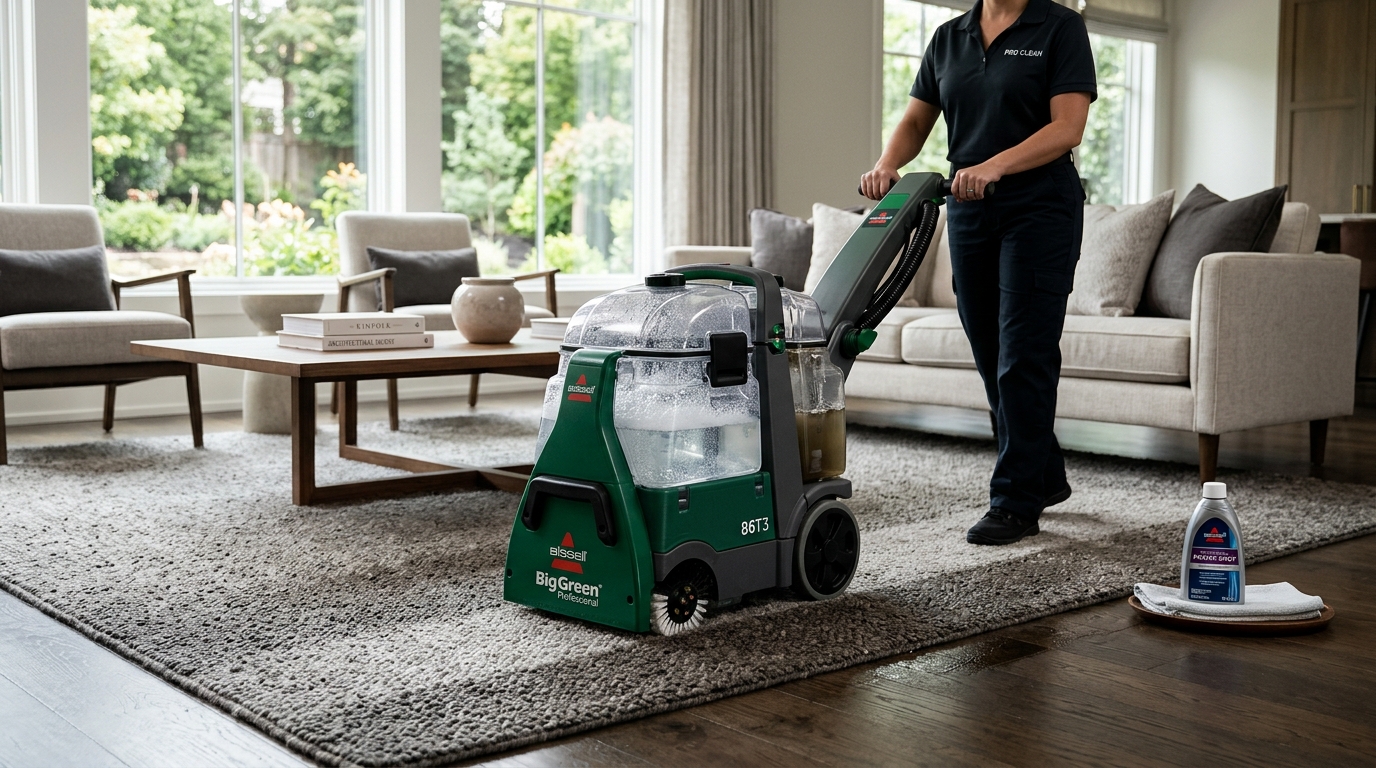
The Bissell Big Green 86T3 is the gold standard for anyone looking to achieve professional results without hiring a crew. Most commercial carpets suffer from deep-seated grit that standard vacuums and residential cleaners simply cannot reach. This machine solves that by utilizing a heavy-duty rotating brush and high-pressure suction to pull out dirt from the very bottom of the carpet fibers. It transforms dingy, high-traffic hallways back to their original color with a single pass, saving you the recurring expense of professional contracts.
Performance & Build Quality
The build quality is immediately evident through its rigid, high-impact plastics and reinforced components. Unlike residential models that feel flimsy, the Big Green feels dense and stable. Its motor is designed for sustained use, meaning it won’t overheat after twenty minutes of cleaning a large conference room. The extra-large tanks are a massive efficiency boost, allowing you to clean a significant area before needing a refill or a trip to the drain. The suction power is particularly impressive; it leaves carpets only slightly damp, which is critical in a business environment where you cannot afford to have rooms out of commission for twenty-four hours.
Real-World Experience
In a busy office setting, you will likely use this machine to tackle coffee spills and the “graying” of paths leading to the breakroom. Owners often mention that the forward and backward cleaning motion cuts their work time in half compared to machines that only clean on the pull stroke. A common complaint is that the machine is quite heavy—around 40 pounds empty—making it a challenge if your facility has multiple floors without an elevator. However, the result is a level of cleanliness that usually requires a truck-mounted professional rig. Users frequently report that the folding handle makes it surprisingly easy to store in a standard supply closet despite its industrial size.
Ease of Use & Value for Money
While the initial cost is higher than a consumer-grade unit, the value is realized within the first three or four uses. If a professional service charges $300 for a floor, this machine pays for itself in a single quarter. The tank system is intuitive; the clean and dirty water are kept completely separate, and the flow indicator lets you know exactly when you need more solution. It is a straightforward tool that does not require a complex manual to operate effectively.
Who Should Buy It (and Who Should Skip)
- Best For: Small to medium office owners, facility managers, and homeowners with large areas of commercial-grade low-pile carpet.
- Main Features: DirtLifter PowerBrush, 1.75-gallon tank, 25-foot power cord, 9-foot hose.
- Pros: Industrial-strength suction, cleans in both directions, highly durable motor.
- Cons: Very heavy when full, not ideal for thick shag carpeting.
If you are tired of looking at traffic patterns that never seem to go away, this machine provides the mechanical force needed to actually remove the soil rather than just shifting it around. Investing in this unit means you take control of your building’s appearance immediately.
2. Rug Doctor Pro Deep Carpet Cleaner
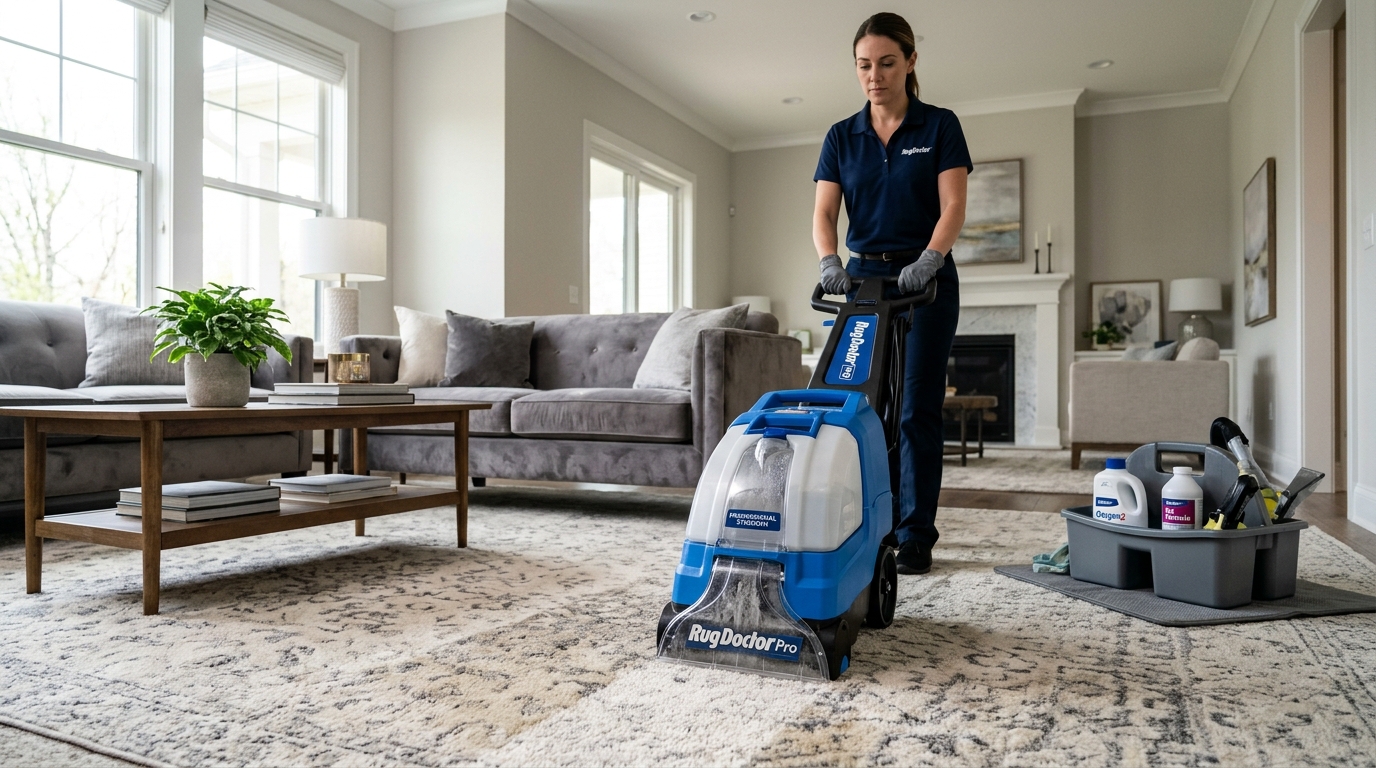
The Rug Doctor Pro Deep is built for the user who values longevity and simplicity over fancy aesthetics. Commercial environments are notorious for “beating up” equipment, and this machine is designed to withstand that abuse. It addresses the common problem of machine failure by using industrial-grade pumps and a simplified internal water path that is less likely to clog. It is the ideal choice for retail spaces or rental properties where the carpet is subjected to salt, mud, and heavy foot traffic daily.
Performance & Build Quality
The performance is centered around a vibrating brush technology that differs from the rotating cylinders found in other brands. This “scrubbing” action is particularly effective at breaking up dried-in mud and salt crystals that have been crushed into the carpet. The motor is a 7.1-amp powerhouse that provides consistent spray pressure, ensuring that the cleaning solution penetrates deep into the backing. Construction-wise, it uses thick-walled tanks and a robust frame that doesn’t creak or flex under pressure. It feels like a tool designed for a twenty-year lifespan rather than a disposable appliance.
Real-World Experience
Imagine a rainy Monday where dozens of people walk through your lobby; this is where the Rug Doctor Pro shines. Owners often mention how the upholstery tool is surprisingly powerful, making it great for cleaning office chairs and fabric partitions. A common complaint is that the machine can be “thirsty,” meaning it goes through water and solution quite quickly because it saturates the carpet so thoroughly. You will need to plan for a longer drying time if you use the heavy-cleaning mode. However, users frequently report that it pulls up old stains that previous professional cleanings failed to remove, likely due to the unique vibrating brush action.
Ease of Use & Value for Money
The user interface is minimal, which is a benefit in a commercial setting where different staff members might be using it. There are clear labels for “wash” and “rinse” modes. In terms of value, it sits in the mid-to-high price range but excels because it rarely requires repairs. It is a “buy it once” type of purchase. The ease of filling and emptying the tanks—thanks to a bucket-style handle—makes the maintenance aspect of the job much less of a chore.
Who Should Buy It (and Who Should Skip)
- Best For: Property managers, retail storefronts, and environments with high salt or mud tracking.
- Main Features: Vibrating brush technology, 1.5-gallon tank, pro-grade suction motor.
- Pros: Extremely durable, excellent on tough stains, easy to empty.
- Cons: Noisy operation, heavier than some competitors.
For those who need a machine that works every single time it is pulled out of the closet, the Rug Doctor Pro Deep is the reliable workhorse you want on your side. It eliminates the frustration of equipment downtime and ensures your floors stay professional.
3. Hoover Commercial PowerScrub Elite
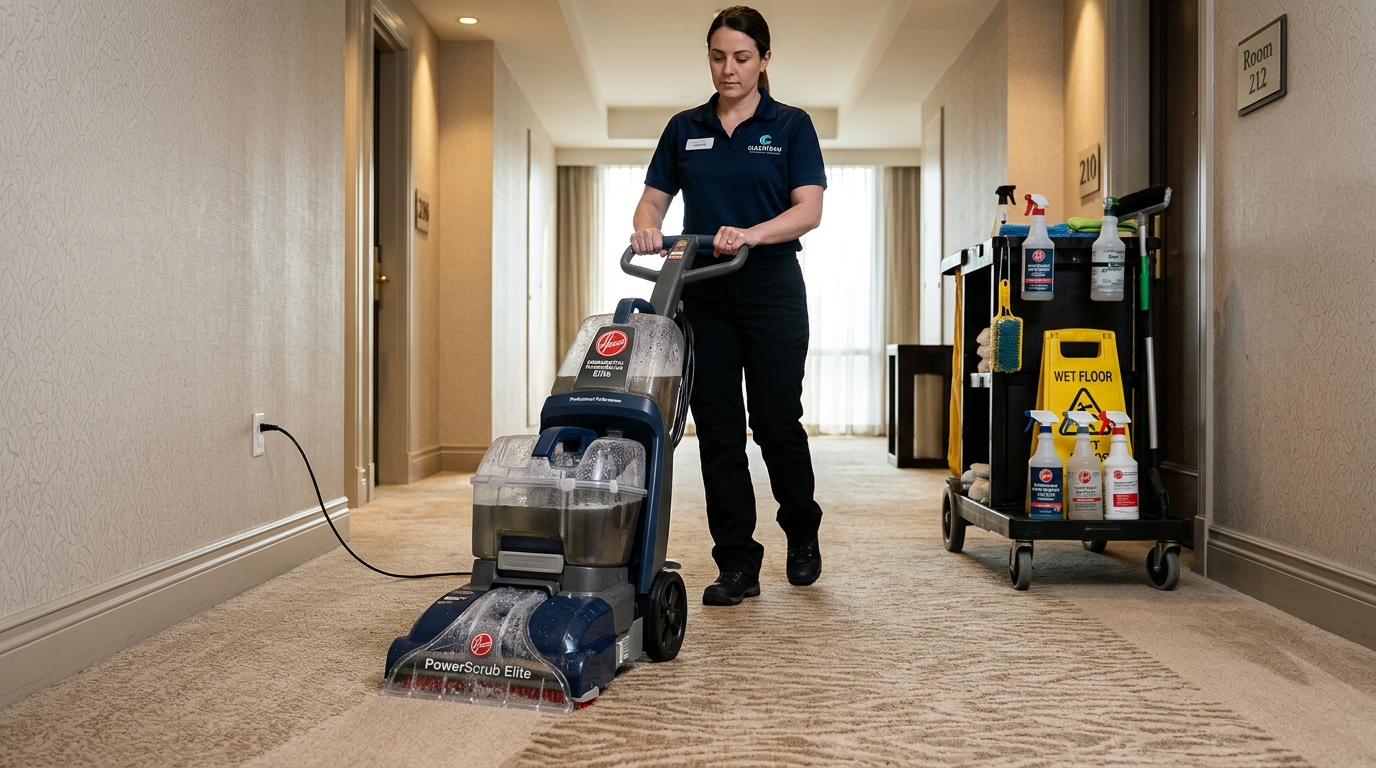
The Hoover Commercial PowerScrub Elite solves the biggest headache in commercial cleaning: drying time. Most businesses cannot wait twelve hours for a lobby to dry. This machine features a dedicated “Quick Clean” mode and HeatForce technology that blows hot air directly onto the carpet fibers during the suction phase. It is the best option for “light and frequent” cleaning where you want to keep the carpets looking fresh without turning the office into a swamp for the day.
Performance & Build Quality
This machine is significantly lighter than the Bissell or Rug Doctor, which makes it much more agile around desks and tight corners. While it uses more plastic in its construction, it is rated for commercial use, meaning the seals and motor are tougher than the standard home version. The SpinScrub brushes rotate 360 degrees to scrub every angle of the carpet fiber. It doesn’t have the brute force of a 40-pound extractor, but for regular maintenance and spill response, it is more than capable. The build is focused on ergonomics, making it less taxing on the person doing the cleaning.
Real-World Experience
For a small boutique or a satellite office, this is often the preferred choice. Owners often mention how the “Wash/Rinse” dial is a favorite feature; it allows you to wash with soap and then switch to a pure water rinse to ensure no sticky residue is left behind to attract more dirt. A common complaint is that the tanks are smaller, meaning more frequent trips to the sink. However, users frequently report that in “Quick Clean” mode, carpets are bone-dry in less than forty-five minutes. This allows you to clean during a lunch break without disrupting the afternoon workflow.
Ease of Use & Value for Money
This is arguably the best value for money for a small business on a budget. It provides about 80% of the performance of the “big” machines at a fraction of the weight and cost. The brushes are removable without tools, which is a small detail that makes cleaning the machine itself—something people often forget—much easier. If you don’t need to clean 5,000 square feet in one go, this is a very smart purchase.
Who Should Buy It (and Who Should Skip)
- Best For: Small offices, boutiques, and facilities where fast drying is the top priority.
- Main Features: HeatForce drying, SpinScrub brushes, Wash/Rinse selector.
- Pros: Lightweight and agile, very fast drying, affordable.
- Cons: Smaller tanks, not intended for massive industrial square footage.
If your main goal is to keep your workspace looking sharp without the hassle of a heavy machine or long wait times, the PowerScrub Elite is the most practical tool for the job. It makes routine maintenance so easy that you will actually do it.
4. Sanitaire SC6088B Commercial Deep Cleaner
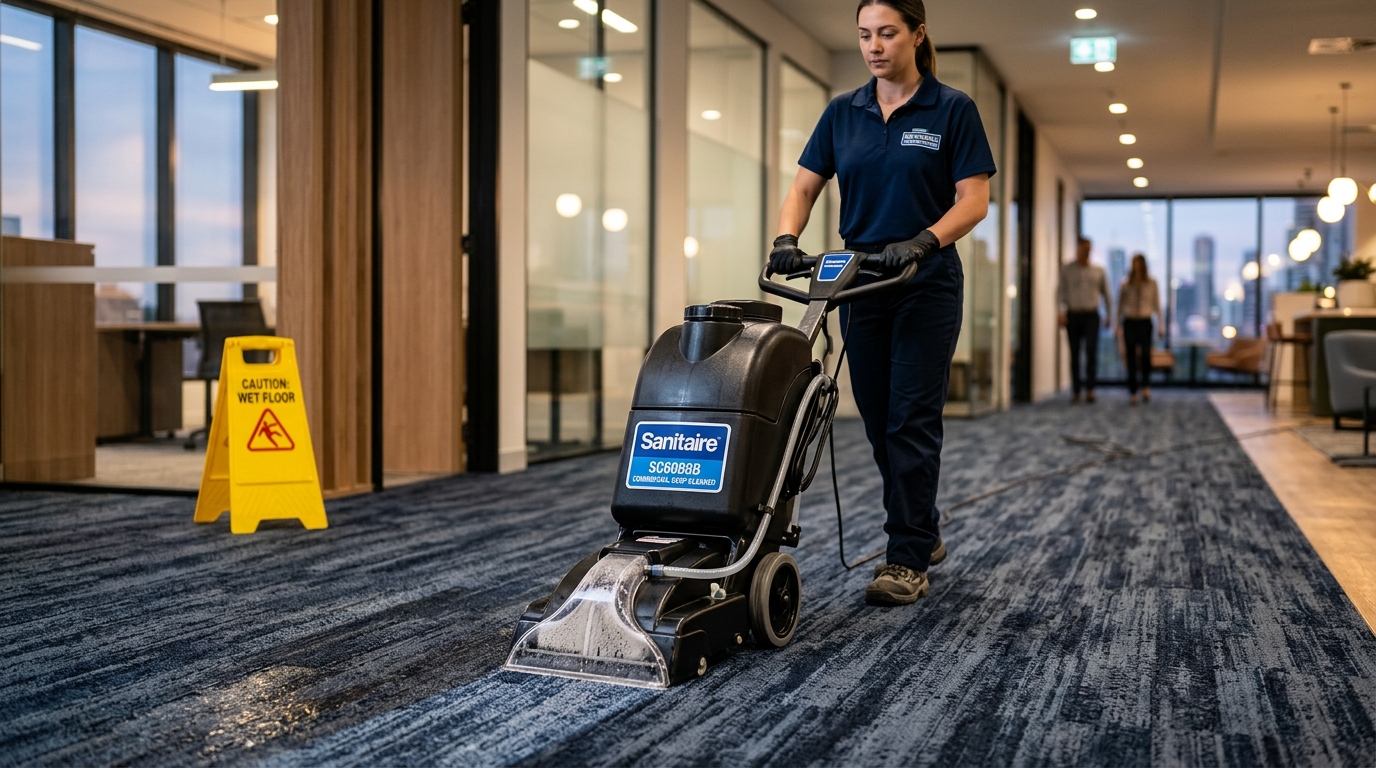
The Sanitaire SC6088B is designed for the high-capacity needs of large commercial spaces like churches, schools, or shared workspaces. The primary problem it addresses is the “efficiency gap”—the time lost when a cleaner has to stop every ten minutes to empty a small tank. With its massive 1.75-gallon capacity and wide cleaning path, it is built to cover vast areas of carpet in a single session. It is a no-frills, high-output extractor that prioritizes square footage over bells and whistles.
Performance & Build Quality
Performance is focused on deep extraction. It uses a powerful spray that reaches deep into the carpet pile and a heavy-duty brush roll to lift matted fibers. The build quality is pure Sanitaire: utilitarian, durable, and easy to service. The machine uses high-quality gaskets and a motor designed for high-duty cycles. It doesn’t look like a modern appliance; it looks like a piece of janitorial equipment, and it performs accordingly. It is built to be used daily by maintenance staff who may not be particularly gentle with the equipment.
Real-World Experience
In a large hall or corridor, the Sanitaire’s 12-inch cleaning path becomes its greatest asset. Owners often mention that the long 50-foot power cord (on some variants) or the standard long-reach hose allows them to clean entire rooms without constantly searching for a new outlet. A common complaint is that it is quite loud, which is typical for high-suction commercial motors. Users frequently report that the large wheels make it easy to tilt and roll over thresholds, which is a major plus when moving between rooms in a large facility. It is a “set it and go” machine that doesn’t require constant fiddling.
Ease of Use & Value for Money
This machine offers excellent value for large-scale operations because it reduces labor time. Since labor is the most expensive part of cleaning, a machine that allows a staff member to finish a floor 20% faster pays for itself very quickly. The controls are simple toggles that are hard to break. While it lacks some of the “smart” features of consumer brands, its simplicity is exactly why it lasts so long in a professional environment.
Who Should Buy It (and Who Should Skip)
- Best For: Schools, churches, large office suites, and professional janitorial staff.
- Main Features: 1.75-gallon tank, wide cleaning path, professional-grade brush roll.
- Pros: High capacity, very durable, excellent for large open areas.
- Cons: Basic design, loud operation, bulky for small offices.
When you have thousands of square feet to maintain, you need a machine that doesn’t slow you down. The Sanitaire SC6088B is the heavy-duty solution that keeps your maintenance schedule on track and your floors pristine.
5. McCulloch MC1385 Deluxe Canister Steam Cleaner
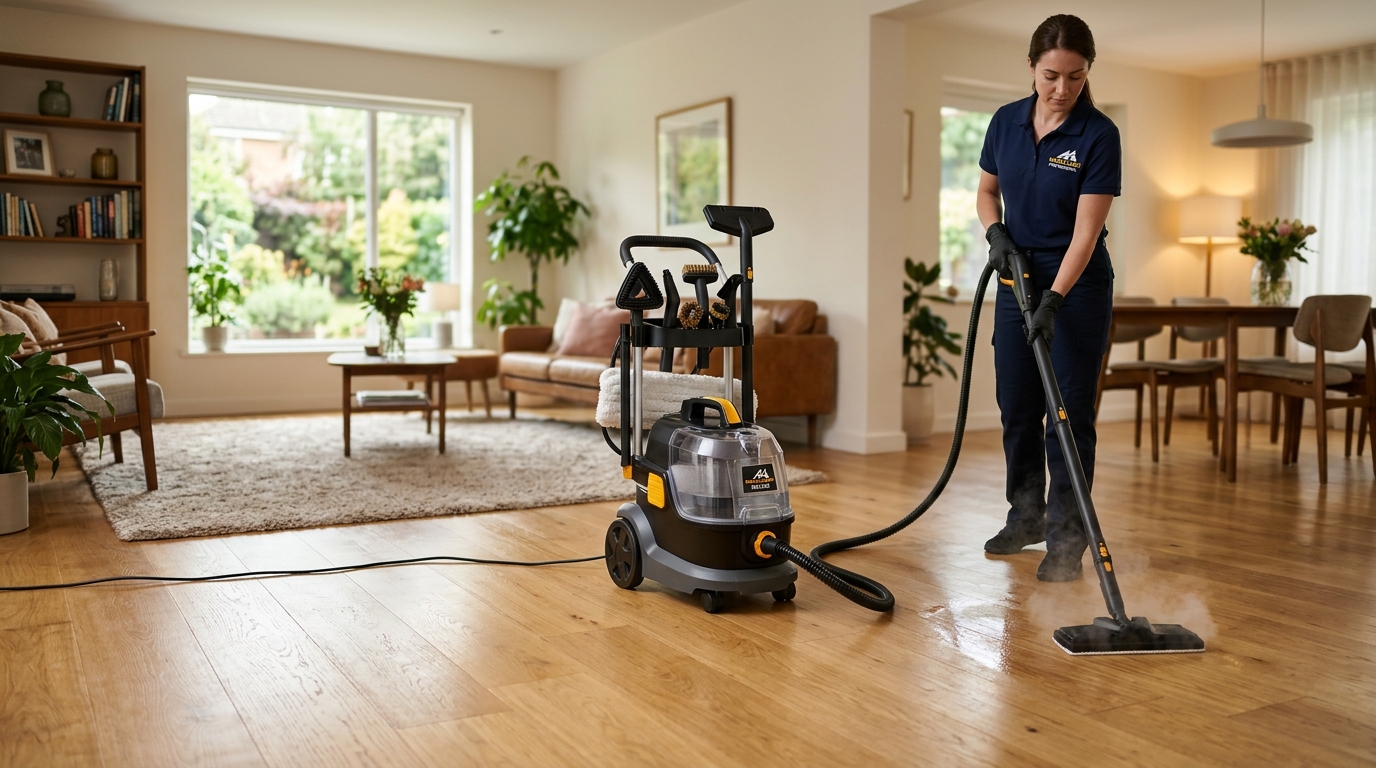
The McCulloch MC1385 is the specialist in the lineup, designed for those who need to clean without harsh chemicals or handle “impossible” spots that extractors can’t touch. Many commercial environments, such as daycares or medical clinics, have strict rules about chemical residue. This steam cleaner uses high-pressure, high-temperature steam to melt away grease, gum, and deep stains while sanitizing the surface. It is the perfect companion to a larger extractor, handling the detail work that an upright machine misses.
Performance & Build Quality
This isn’t a carpet extractor in the traditional sense; it doesn’t spray soapy water and suck it back up. Instead, it uses 4 bar (58 PSI) of steam pressure to blast dirt loose. The build is rugged for a canister unit, featuring a large 64-ounce water tank that provides up to two hours of continuous steam. It feels like a high-end workshop tool. The performance on carpet is best when using the floor attachment with a microfiber cloth, which “lifts” the dirt out of the fibers. It is also an incredible tool for cleaning the tile in restrooms or the grout in breakrooms, making it a versatile asset for a facility manager.
Real-World Experience
Owners often use this for the “impossible” tasks: removing old gum from a lobby carpet, cleaning the tracks of sliding glass doors, or sanitizing high-touch fabric chairs. Owners often mention how the integrated cord wrap and accessory storage keep everything organized in a small closet. A common complaint is that the initial heat-up time takes about 12 minutes, so you can’t just “plug and play.” However, users frequently report that the steam pressure remains consistent throughout the entire tank, which is a massive improvement over cheaper handheld steamers. It is the ultimate tool for deep-cleaning corners and edges where dirt tends to accumulate.
Ease of Use & Value for Money
The value here is in its versatility. If you buy this, you aren’t just getting a carpet spot-cleaner; you’re getting a tool that cleans windows, tile, upholstery, and even office equipment. It is very easy to use once it is heated up, with a variable steam trigger that allows you to control exactly how much moisture you’re putting into the carpet. For a business that wants to avoid the cost and storage of five different cleaning tools, this canister is a high-value alternative.
Who Should Buy It (and Who Should Skip)
- Best For: Daycares, medical offices, small restaurants, and anyone needing chemical-free sanitization.
- Main Features: 58 PSI steam pressure, 64-ounce tank, 23-piece accessory kit.
- Pros: No chemicals required, sanitizes surfaces, incredibly versatile.
- Cons: Not for wall-to-wall extraction, long heat-up time.
If you care about the health of your environment and need a tool that can handle more than just the floors, the McCulloch MC1385 is the versatile powerhouse that fills the gaps in your cleaning routine.
How much does commercial carpet cleaning cost per square foot?
Professional commercial carpet cleaning typically costs between $0.15 and $0.40 per square foot, depending on the method used and the total area. Larger spaces often receive “volume discounts,” while smaller offices may be subject to a minimum service fee, usually ranging from $100 to $200. High-traffic areas requiring intensive spot treatment will sit at the higher end of the price spectrum.
Commercial Carpet Cleaning Costs: Factors That Matter
Understanding why prices fluctuate helps you budget effectively. If your office has an open floor plan with minimal furniture, you will likely pay near the $0.15 mark. However, if the cleaners have to move desks, chairs, and filing cabinets, labor costs will drive the price toward $0.40 or higher. Additionally, the type of carpet matters; low-pile commercial carpet is cheaper to clean than thick, plush executive carpeting because it requires less water and drying time.
Methodology and Its Impact on Price
- Hot Water Extraction (Steam Cleaning): This is the “deep” method. It is often the most expensive because it involves heavy equipment and longer labor times, but it provides the most thorough results.
- Encapsulation (VLM): This Very Low Moisture method is usually cheaper and faster. It uses a chemical foam that crystallizes dirt, which is then vacuumed away. It’s perfect for monthly maintenance.
- Dry Cleaning: This uses a specialized powder. It is often priced similarly to encapsulation and is valued for its zero-dampness result, allowing immediate foot traffic.
Budgeting for Professional vs. DIY
While hiring a professional provides a deep, restorative clean, purchasing your own commercial-grade machine can save thousands over several years. A high-quality commercial extractor costs between $400 and $700. If you have a 2,000-square-foot office, a single professional cleaning might cost $500. By buying a machine, you break even after just one or two uses, though you must account for the labor of your own staff.
What are the most effective commercial carpet cleaning methods?
The most effective method for deep cleaning is hot water extraction, which uses high-pressure water and suction to remove deep-seated soil. For routine maintenance in high-traffic areas, encapsulation is preferred because it dries in under an hour and prevents “wicking,” where stains reappear as the carpet dries. Most businesses use a hybrid approach of both methods.
Hot Water Extraction: The Deep Clean
Often mistakenly called “steam cleaning,” this process involves injecting a mixture of hot water and detergent into the carpet and then immediately extracting it with high-suction vacuum motors. It is the only method that can remove oily residues, pollen, and deeply embedded skin cells. You should perform this at least once or twice a year to maintain carpet warranties and improve indoor air quality. The trade-off is a 6-to-12-hour drying time.
Encapsulation: The Maintenance King
Encapsulation uses polymers that surround dirt particles on the carpet fiber and turn them into brittle crystals. Once dry, these crystals are simply vacuumed away. It is significantly faster than extraction and uses much less water, making it “eco-friendly” and ideal for 24-hour facilities like hotels or hospitals. It is not, however, a substitute for the deep-cleaning power of extraction; it is a way to keep the surface looking clean between deep treatments.
Bonnet Cleaning: A Quick Fix
Bonnet cleaning involves a rotary floor machine with a dampened pad that “mops” the top of the carpet. While it is very fast and cheap, it often just pushes dirt deeper into the pile rather than removing it. Most carpet manufacturers actually discourage bonnet cleaning because it can damage the fibers and void warranties. Use this only for emergency “appearance” cleaning before a big meeting, and follow it up with an extraction later.
Comprehensive Buying Guide
Choosing a commercial carpet cleaner requires looking past the brand name and focusing on water lift, tank capacity, and brush design. A machine with high “water lift” (measured in inches) will leave carpets drier, which prevents mold and allows faster room turnover. Always prioritize a machine with a separate rinse cycle to prevent chemical buildup that attracts dirt.
Crucial Factors to Consider
- Tank Capacity: For a small office (under 1,000 sq ft), a 1-gallon tank is fine. For larger spaces, look for 1.5 to 2 gallons. Emptying and refilling takes more time than the actual cleaning.
- Weight and Portability: A 50-pound machine is great for deep cleaning but a nightmare if you have to carry it up stairs. Consider “canister” styles if portability is your main concern.
- Brush Type: Rotating brushes (cylindrical) are best for lifting hair and deep grit. Vibrating brushes are better for breaking up surface crust and mud.
- Cord Length: A 25-foot cord is standard, but in a large commercial lobby, you will want 40 to 50 feet to avoid “outlet hopping.”
Common Mistakes to Avoid
One of the biggest mistakes is using too much detergent. In a commercial setting, “more is not better.” Excess soap stays in the carpet fibers, acts like a magnet for new dirt, and causes the carpet to look dingy within weeks. Another mistake is skipping the vacuuming step. You should always vacuum thoroughly before using a wet cleaner to remove the 80% of soil that is dry and loose.
Maintenance for Your Machine
To keep your investment running, you must clean the machine after every use. This means rinsing the dirty water tank, clearing the brush roll of hair or carpet fibers, and flushing the lines with clean water to prevent clogs. If you leave dirty water in the tank over a weekend, the smell can become permanent, ruining the machine and the air quality of your office.
Frequently Asked Questions
How often should commercial carpets be professionally cleaned?
Most offices require deep cleaning every 6 to 12 months, though high-traffic areas like entryways or breakrooms may need it quarterly. Frequent cleaning prevents dirt from acting like sandpaper, which grinds down and permanently destroys carpet fibers. Avoid waiting until the carpet “looks dirty” to clean it, as damage has already occurred by that point.
Can I use residential carpet cleaner in a commercial machine?
No, you should only use commercial-grade low-suds detergents in professional machines. Residential cleaners often create too much foam, which can overflow into the vacuum motor and cause permanent damage. Furthermore, commercial carpets are often treated with stain-resist coatings that require specific pH-balanced cleaners to avoid stripping the protection away.
What is the fastest drying carpet cleaning method?
Encapsulation or Very Low Moisture (VLM) cleaning is the fastest, typically drying within 20 to 60 minutes. This makes it the preferred choice for businesses that operate 24/7. To speed up drying after a deep hot water extraction, use high-velocity air movers and keep the building’s HVAC system running on the “fan” setting to circulate air.
Is it cheaper to rent or buy a commercial carpet cleaner?
Renting a machine usually costs between $40 and $60 per day, plus the cost of chemicals. If you plan to clean your carpets more than twice a year, buying a machine is significantly cheaper in the long run. Owning the machine also allows you to react immediately to spills, preventing permanent stains that a rental wouldn’t catch in time.
Does professional cleaning remove odors like cigarette smoke or food?
Deep extraction removes the source of the odor trapped in the fibers, but for persistent smells like smoke, you may need an odor neutralizer additive. Simply “masking” the smell with a scented spray won’t work; the machine must physically remove the organic matter causing the odor. Steam cleaning is particularly effective at killing odor-causing bacteria without heavy perfumes.
Will cleaning my carpet more often make it get dirty faster?
This is a common myth that only holds true if you use the wrong soap or fail to rinse. If soap residue is left behind, it acts as an adhesive for dirt. However, if you use a high-quality machine with a proper rinse cycle, frequent cleaning will actually keep your carpets cleaner for longer and significantly extend their lifespan.
Which commercial carpet cleaning solution is right for you?
To choose the right path, you must match the tool to your specific environment and traffic level. For most businesses, the Bissell Big Green Professional 86T3 is the best overall choice because it offers the perfect balance of industrial power and ease of use. If you are managing a massive facility with huge open floors, the Sanitaire SC6088B is your high-capacity workhorse. For those on a tight budget or in a small boutique, the Hoover Commercial PowerScrub Elite provides excellent results with the fastest drying times in its class. If your facility has strict chemical sensitivities, the McCulloch MC1385 offers a steam-based alternative that sanitizes without detergents. The best first step you can take today is to walk your floor, identify your highest-traffic zones, and commit to a regular maintenance schedule that stops dirt before it settles.
