
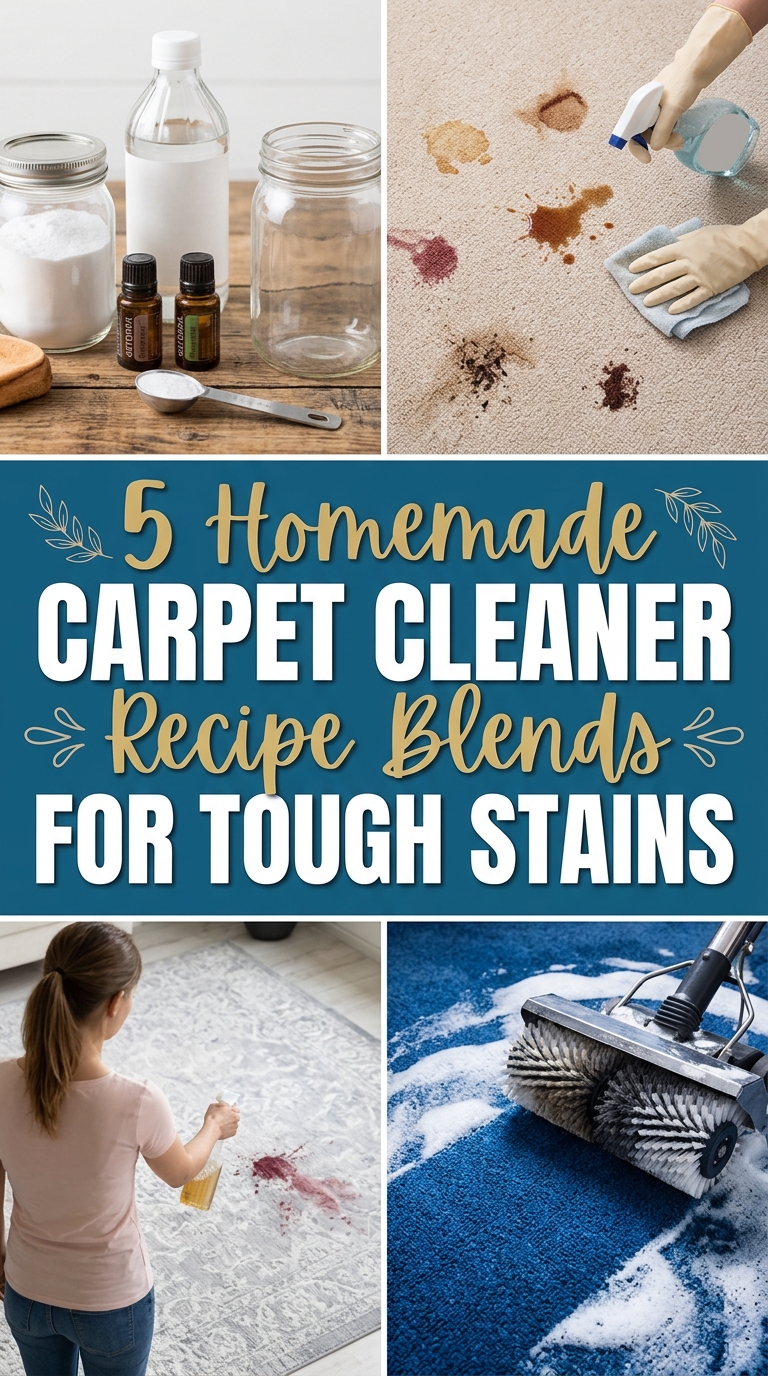
The red wine bottle slipped, leaving a massive crimson blotch right in the middle of your cream-colored rug. It feels like the carpet is mocking you, but before you call a professional, reach for your pantry staples. You can make 5 homemade carpet cleaner recipe blends for tough stains using common household items like white vinegar, baking soda, and hydrogen peroxide to lift deep-set grime without harsh chemicals. These DIY solutions are cost-effective, safer for pets, and often perform just as well as store-bought alternatives when applied correctly.
| Recipe Blend | Best For | Key Features | Pros | Cons |
|---|---|---|---|---|
| Vinegar & Dish Soap | General Grime | Multi-purpose, acidic | Very cheap, non-toxic | Strong scent initially |
| Baking Soda & Peroxide | Old, Set-in Stains | Oxygen-bleaching action | Lifts deep pigments | Risk of bleaching dark dyes |
| Cornstarch & Salt | Oil & Grease | Absorbent powders | No liquid needed | Requires heavy vacuuming |
| Essential Oil Mix | Pet Messes & Odors | Antimicrobial, fresh | Smells amazing | E-oils can be pricey |
| Club Soda & Lemon | Coffee & Juice | Carbonated lifting | Fast-acting | Must be fresh soda |
1. The Heavy-Duty Vinegar and Dish Soap Blend
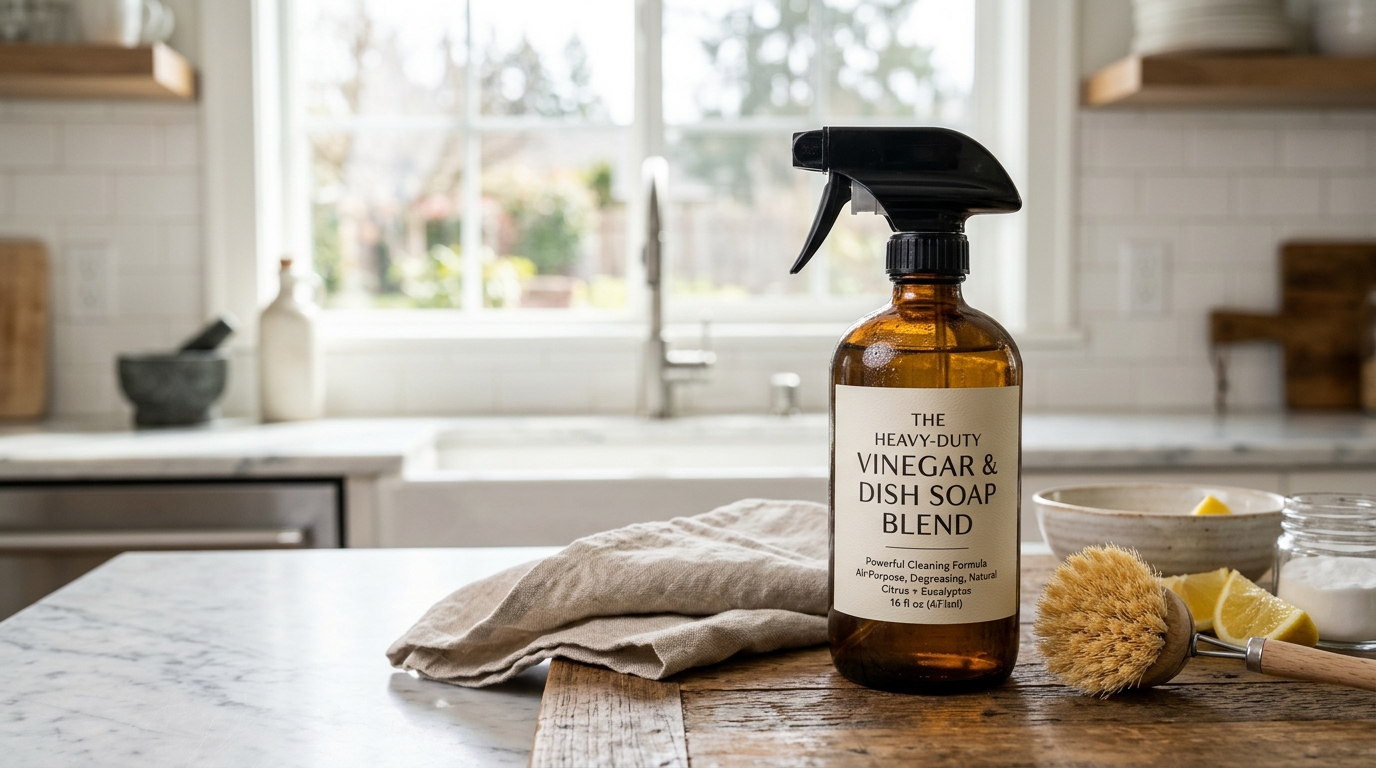
A reliable vinegar and dish soap blend works by using acetic acid to break down organic bonds while the surfactants in the soap lift dirt to the surface. To make this, mix one tablespoon of clear dish soap and one tablespoon of white vinegar into two cups of warm water. It is the gold standard for high-traffic areas and muddy footprints because it cleans without leaving a sticky residue that attracts more dirt later. This formula is safe for most synthetic carpets but should be used sparingly on delicate natural fibers like silk or high-end wool.
Performance & Build Quality
This blend is essentially the “Swiss Army Knife” of cleaning. The vinegar acts as a natural disinfectant and deodorizer, while the dish soap tackles the surface tension of liquid spills. Because you are mixing it yourself, you can control the concentration. A common mistake is using too much soap, which creates a sudsy nightmare that is hard to rinse out. Keeping the ratio lean ensures the carpet fibers stay soft and residue-free. It performs exceptionally well on “mystery stains” that have been sitting for a day or two.
Real-World Experience
Imagine a Tuesday night where the dog runs inside with muddy paws. You reach for your spray bottle, mist the area, and watch the brown spots fade as you blot with a white cloth. Owners of busy households often mention how this blend replaces three or four expensive specialty cleaners. A common complaint, however, is the “salad dressing” smell that lingers for an hour. To live with this, simply crack a window; the vinegar scent disappears completely once the carpet is fully dry, taking the bad odors with it.
Ease of Use & Value for Money
You probably already have these ingredients in your kitchen, making the cost-per-use almost zero. It takes about thirty seconds to shake the ingredients together in a spray bottle. For the price of a single fancy latte, you could make enough of this cleaner to last an entire year. It is the ultimate budget-friendly solution for anyone who wants a clean home without the “chemical” price tag or the trip to the hardware store.
Who Should Buy It (and Who Should Skip)
- Best For: Busy parents, pet owners, and budget-conscious renters who need a daily-use spot cleaner.
- Main Features: Acidic cleaning power, non-toxic ingredients, easy rinsing.
- Pros: Extremely cheap, kills odors, safe for most kids and pets.
- Cons: Vinegar smell is strong during application, not for protein stains like blood.
Overall Verdict
If you only choose one recipe from this list, let it be this one. It is the most versatile tool in your cleaning arsenal and fixes 90% of common household spills before they become permanent eyesores. There is no reason to keep staring at those muddy prints when the solution is sitting in your pantry right now.
2. The Oxygenated Baking Soda and Peroxide Paste
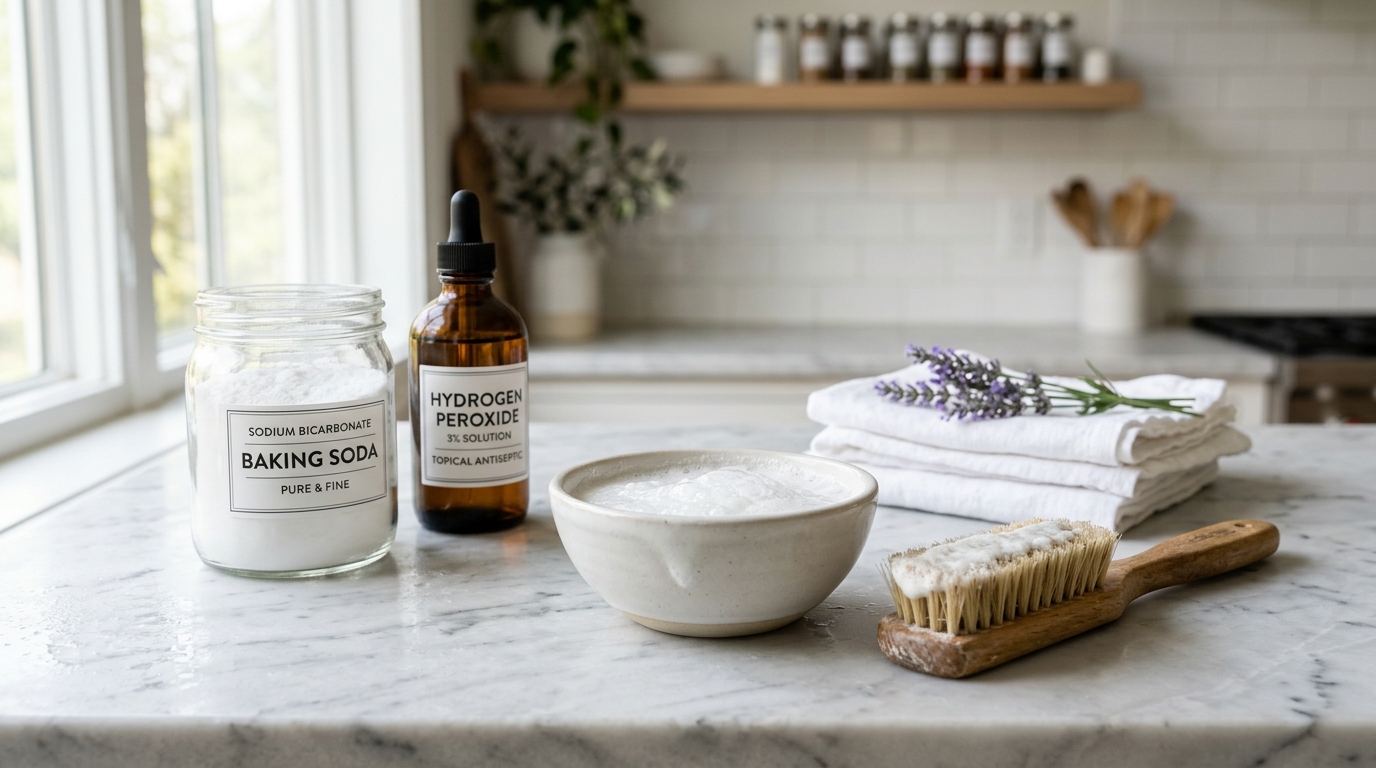
The combination of baking soda and hydrogen peroxide creates a bubbling oxygenating action that physically lifts pigments out of carpet fibers. This paste is the best choice for stubborn, set-in stains like wine, juice, or older pet accidents that have already dried. To use it, sprinkle baking soda over the spot, then lightly mist 3% hydrogen peroxide over the powder. The resulting fizzing reaction breaks down the chemical bonds of the stain, allowing you to blot the mess away with minimal scrubbing.
Performance & Build Quality
This blend mimics the performance of high-end “Oxi” cleaners found in stores. Hydrogen peroxide is a mild bleach, so it is incredibly effective at removing color-based stains. The baking soda acts as a mild abrasive and a powerful odor neutralizer. Together, they form a thick paste that sits on top of the stain, drawing the liquid upward rather than pushing it deeper into the carpet pad. This prevents “wicking,” which is when a stain seems to disappear but reappears days later.
Real-World Experience
Users frequently report success with this blend on white or light-beige carpets where other cleaners failed. For a first-time user, seeing the “fizz” can be satisfying because you know the chemistry is working. However, a common complaint is that if the paste dries too much, it can be crunchy and difficult to vacuum up. To avoid this, use just enough peroxide to dampen the soda, not soak it. Also, owners of dark blue or black rugs should be cautious; users have reported occasional color fading, so always test a hidden corner first.
Ease of Use & Value for Money
While this requires two steps (sprinkling then spraying), the actual effort is low. You do not need to scrub vigorously; the oxygen does the heavy lifting for you. In terms of value, a bottle of peroxide and a box of baking soda cost less than a pack of gum. It is significantly more powerful than many commercial products that cost ten times as much, especially for organic stains like blood or urine.
Who Should Buy It (and Who Should Skip)
- Best For: Removing tough organic stains like wine, blood, or vomit on light-colored carpets.
- Main Features: Oxygen-based lifting, heavy-duty deodorizing, paste application.
- Pros: Removes “impossible” stains, very low cost, no scrubbing required.
- Cons: Can bleach dark carpet fibers, messy if over-applied.
Overall Verdict
This is your “nuclear option” for stains that refuse to budge. It is the most powerful DIY stain remover available, provided you are working with light-colored flooring. If you have a stubborn spot that has been bothering you for months, this simple chemical reaction is your best chance at a total fix.
3. The Essential Oil and Alcohol Odor Buster
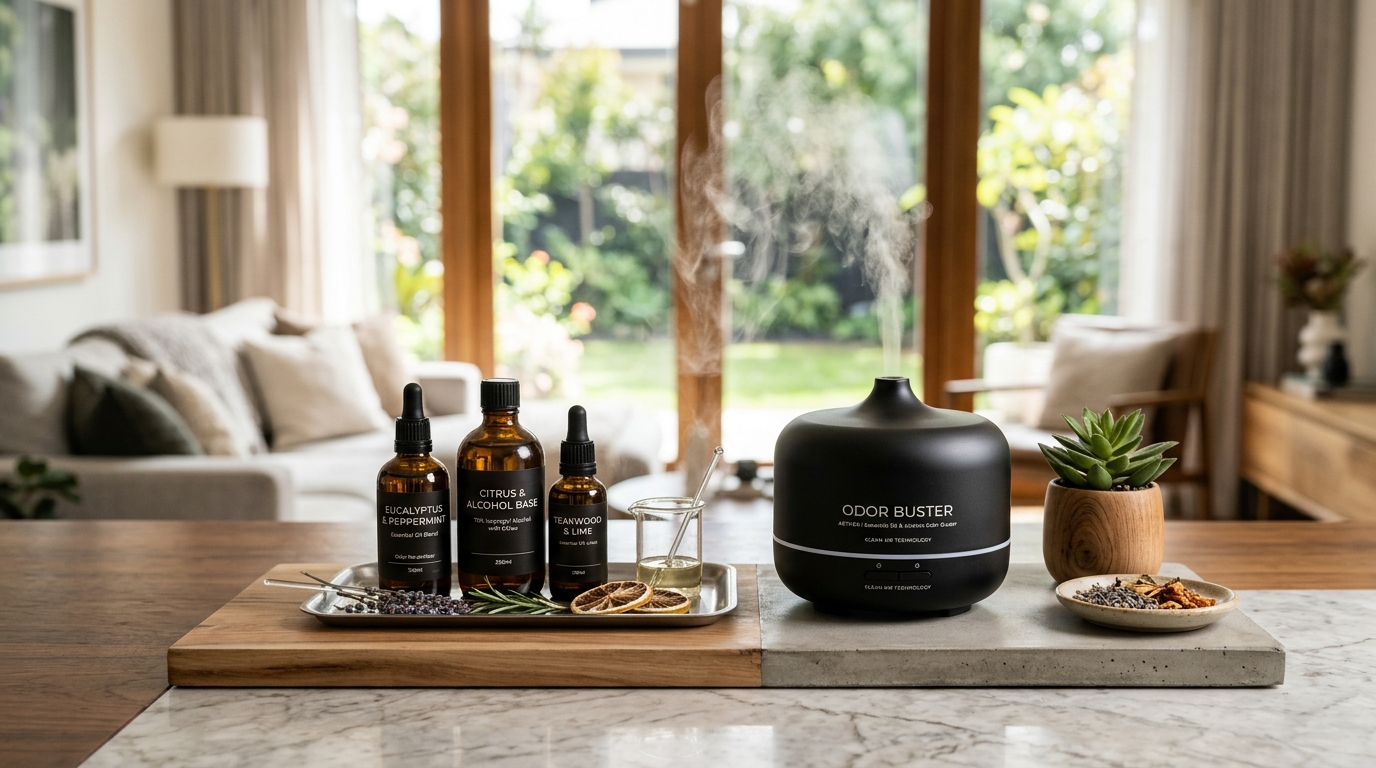
The Essential Oil and Alcohol Odor Buster is designed to tackle the microscopic bacteria that cause lingering smells from pets or dampness. By mixing half a cup of rubbing alcohol with ten drops of essential oils like lavender or tea tree, you create a fast-drying spray that sanitizes and refreshes. This is the ideal solution for large area rugs that smell “musty” or for spot-treating areas where a pet has had an accident. The alcohol kills bacteria and evaporates almost instantly, preventing mold growth.
Performance & Build Quality
Most commercial deodorizers just mask smells with perfume, but this blend actually neutralizes them. Rubbing alcohol (isopropyl) is a powerful solvent that breaks down oils and kills the bacteria that thrive in carpet fibers. When paired with tea tree or lemon oil—both of which have natural antimicrobial properties—you get a cleaner that leaves the room smelling like a spa rather than a locker room. Because alcohol evaporates so quickly, it is much safer for the subfloor than water-based cleaners.
Real-World Experience
In a small apartment where air circulation is poor, owners often mention that this spray is a lifesaver for keeping carpets fresh. A common scenario involves “that dog smell” that lingers even after the carpet looks clean. Spritzing this lightly across the rug once a week makes a noticeable difference. One drawback users frequently report is the initial sharp scent of the rubbing alcohol. It can be overwhelming for a few minutes, but it dissipates quickly, leaving only the pleasant scent of the oils behind.
Ease of Use & Value for Money
This is a “set it and forget it” cleaner. There is no rinsing or blotting required if you are using it as a deodorizer. Just spray and walk away. While essential oils are an upfront investment, you only use a few drops at a time, making the long-term cost very low. It is a premium-feeling product that you can make at home for a fraction of the cost of “natural” store-bought room sprays.
Who Should Buy It (and Who Should Skip)
- Best For: Pet owners and anyone dealing with musty or stale odors in their home.
- Main Features: High-evaporation rate, bacterial neutralization, customizable scents.
- Pros: Dries in minutes, kills bacteria, smells great.
- Cons: Alcohol can be drying to some natural fibers, scent may be too strong for sensitive noses.
Overall Verdict
For those who care as much about how their home smells as how it looks, this is the perfect maintenance blend. It provides a level of sanitation that soap and water simply cannot match. If your living room feels a bit stale, this quick spray will refresh the entire environment today.
4. The Cornstarch and Salt Grease Scrub
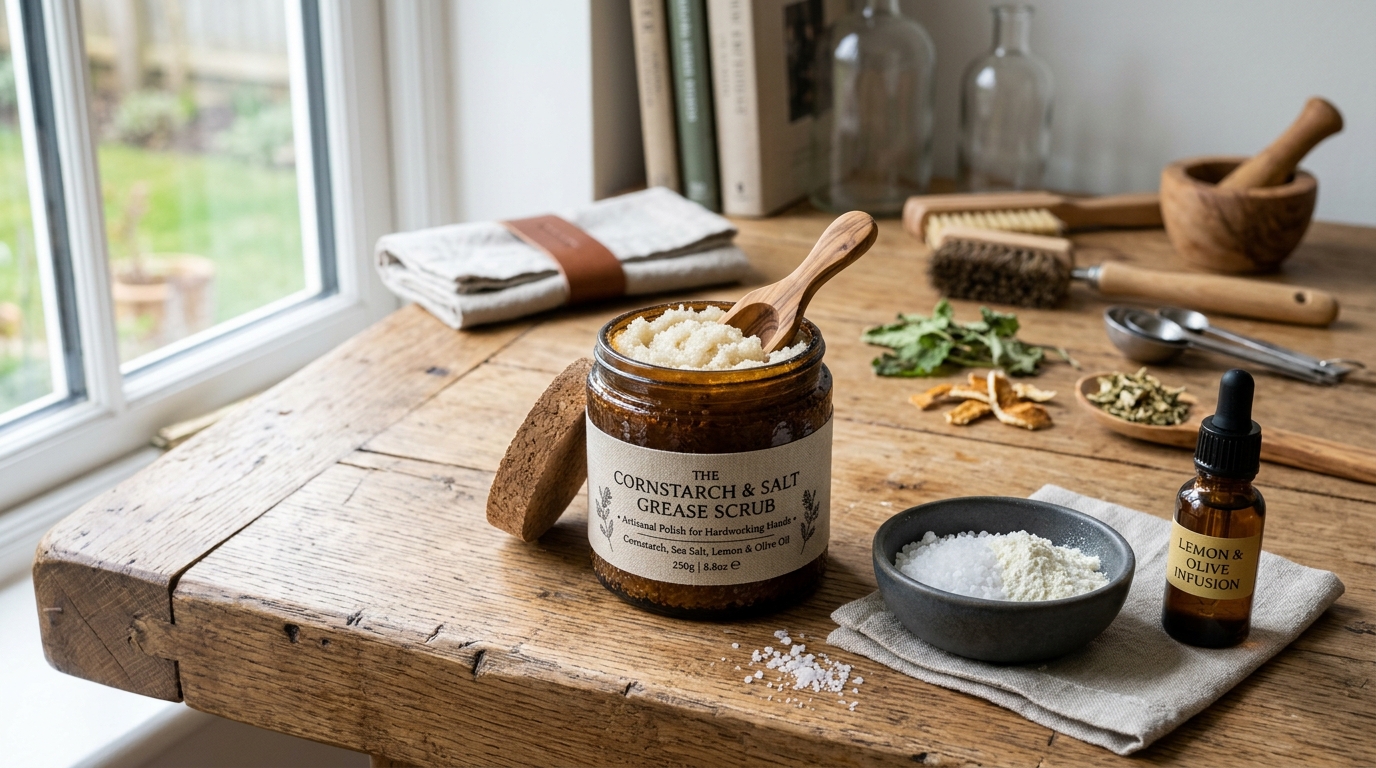
The Cornstarch and Salt Grease Scrub is a dry cleaning method designed specifically for oily spills like pizza grease, lipstick, or butter. By mixing equal parts cornstarch and table salt, you create a powder that acts as a magnet for oils, pulling them out of the carpet before they can soak into the backing. You simply pour the mixture over the grease, let it sit for at least an hour, and then vacuum it up. It is the safest way to treat grease because it avoids using liquids that can spread the oil further.
Performance & Build Quality
Oil is the enemy of traditional liquid cleaners because oil and water don’t mix. The cornstarch has an incredibly fine structure that absorbs liquids through capillary action, while the salt provides a bit of grit to help break up surface clumps. This “dry” approach is essential for grease because liquid cleaners often just push the oil deeper into the carpet pile. It works best when the spill is relatively fresh, though it can still help with older grease spots by loosening the bond.
Real-World Experience
Imagine a movie night where a piece of buttery popcorn or a slice of pepperoni pizza lands face-down. Instead of panic-scrubbing with a wet rag, you cover it in this white powder. Owners often praise how effective this is for “kitchen-adjacent” carpets. A common complaint is the wait time; you really do have to leave it for an hour or more for the absorption to happen. If you vacuum too early, you’ll leave a greasy smudge behind. Patience is the key to success with this particular blend.
Ease of Use & Value for Money
This is likely the easiest recipe on the list. No mixing in bottles, no scrubbing on your hands and knees. Just pour and wait. Since cornstarch and salt are incredibly cheap, this is a nearly free solution. It is also a “dry” process, so there is zero risk of water damage to your flooring or the growth of mildew in the carpet pad.
Who Should Buy It (and Who Should Skip)
- Best For: Kitchen spills, makeup accidents, and oily food stains.
- Main Features: Absorbent powder technology, zero liquid required, safe for all carpet types.
- Pros: Won’t spread the stain, safe for delicate rugs, no drying time.
- Cons: Takes time to work, requires a good vacuum to remove all powder.
Overall Verdict
This is a specialist tool that every home needs. Grease stains are notoriously difficult to remove once they set, so having this simple powder ready can save a carpet that would otherwise be ruined. If you have kids who eat on the rug, keep a jar of this pre-mixed in your cleaning closet.
5. The Carbonated Club Soda and Lemon Splash
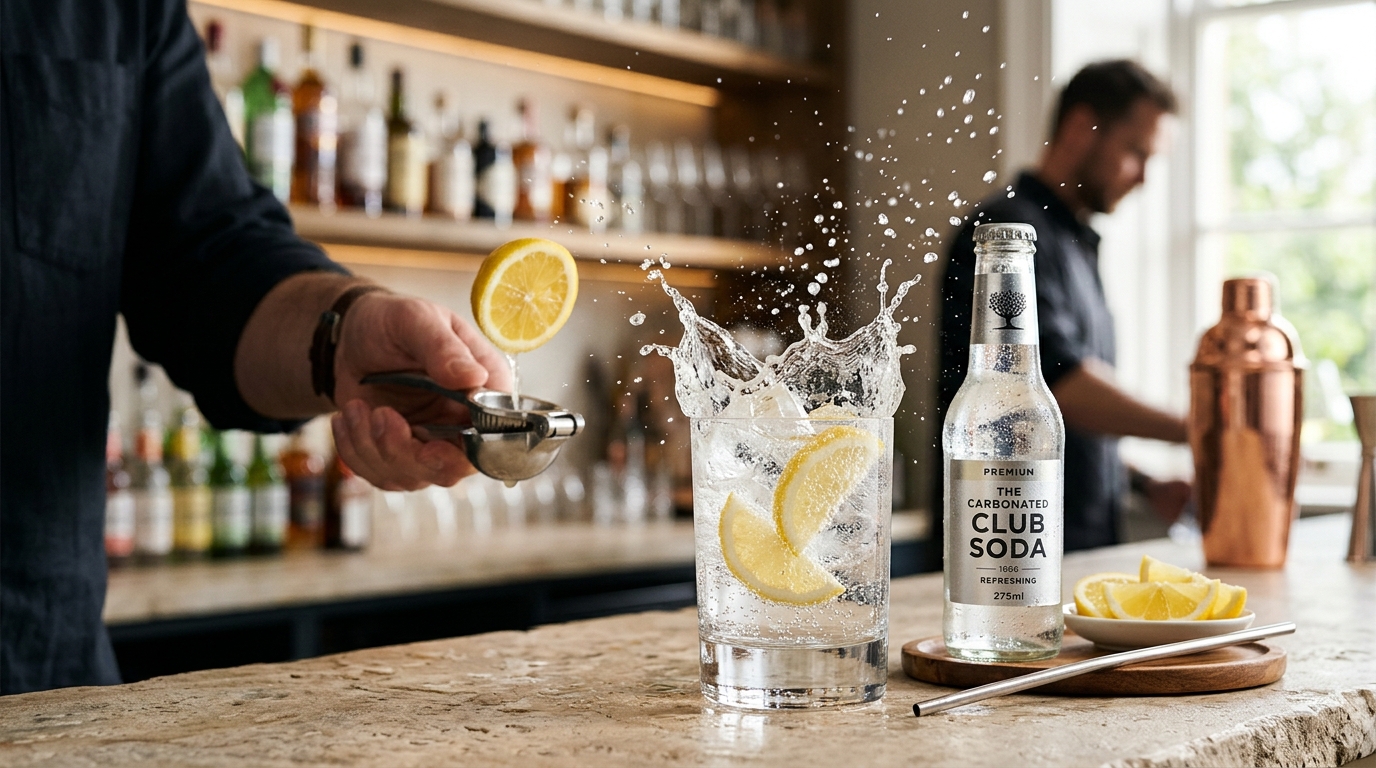
The Carbonated Club Soda and Lemon Splash uses the power of effervescence and citric acid to lift tannins from coffee, tea, and fruit juices. To use this, blot the excess spill first, then pour a small amount of fresh club soda directly onto the spot. The bubbles help agitate the stain from the bottom of the fiber up to the surface. A few drops of lemon juice added to the mix act as a natural bleaching agent and help dissolve the sticky sugars found in many beverages.
Performance & Build Quality
Club soda is a classic for a reason: the carbonation provides a mechanical lifting action that plain water lacks. It is particularly effective on “tannin” stains, which are the organic compounds that give coffee and tea their dark colors. The lemon juice adds an extra layer of cleaning power, as the acid cuts through sugar and protein. This blend is very gentle and is often the first thing professionals recommend trying before moving on to harsher chemical treatments.
Real-World Experience
This is the “emergency” cleaner for many households. Users report that it works best when the bottle of club soda is brand new and full of fizz. A common complaint is that using flat soda doesn’t work nearly as well. In a scenario like a spilled morning coffee, being able to quickly grab a bottle of soda and blot the stain away in under two minutes is a massive win. It’s also frequently mentioned as being safe for wool rugs, which can be sensitive to the higher pH levels of other cleaners.
Ease of Use & Value for Money
It doesn’t get much simpler than pouring a drink on a stain. The value is high because club soda is inexpensive, and you likely have a lemon in the fridge. There is no rinsing required afterward, though you should blot the area thoroughly to ensure it dries quickly. It is an excellent choice for those who want a “natural” lifestyle and avoid synthetic surfactants entirely.
Who Should Buy It (and Who Should Skip)
- Best For: Coffee drinkers, tea lovers, and those with expensive wool or silk rugs.
- Main Features: Carbonated lifting action, citric acid cleaning, ultra-gentle formula.
- Pros: Very safe for delicate fibers, no residue, pleasant natural scent.
- Cons: Requires fresh carbonation to be effective, not for heavy grease or mud.
Overall Verdict
This is the most “gentle-yet-effective” option for daily accidents. If you are worried about damaging a high-quality rug with stronger cleaners, start here. It is a low-risk, high-reward method that has saved countless carpets from the permanent “coffee ring” look.
Comprehensive Buying Guide
The Factors That Truly Matter
When you are choosing or making a carpet cleaner, the chemistry is what determines success. You must consider the pH level of the solution. Acidic cleaners (like vinegar and lemon) are great for organic stains like coffee or grass, while alkaline cleaners (like baking soda) are better for acidic stains like pet urine. Always consider the material of your carpet. Synthetic fibers like nylon are incredibly durable and can handle almost anything, but natural fibers like wool can be damaged by high-heat or high-pH solutions. Finally, think about residue. The biggest mistake people make is using too much soap; if you don’t rinse it out, that soap will act like a magnet for new dirt, and your stain will “reappear” within weeks.
Common Mistakes to Avoid
The number one mistake is scrubbing instead of blotting. When you scrub a carpet, you fray the fibers and push the stain deeper into the backing. Always use a white, lint-free cloth and press down firmly to pull the liquid up. Another error is over-wetting. If the carpet pad gets soaked, it can take days to dry, leading to mold or a “sour” smell. Use just enough liquid to dampen the surface. Lastly, never skip the patch test. Even “natural” ingredients like lemon juice can bleach certain dyes. Test your homemade blend on a small spot inside a closet or under a piece of furniture before hitting the middle of the room.
Budget Guidance and Value
Homemade cleaners are almost always the best value. A gallon of white vinegar costs less than a single small bottle of commercial spray. If you are on a tight budget, the Vinegar and Dish Soap blend will cover 90% of your needs. For those who want the performance of a machine without the rental cost, investing in a high-quality handheld spray bottle and a stiff-bristled brush is the best way to spend your money. You don’t need fancy gadgets to get professional results; you just need the right ingredients and a little bit of patience.
Maintenance Tips for Long-Lasting Carpets
The best way to handle stains is to prevent them. Vacuuming at least twice a week removes the dry soil that acts like sandpaper, grinding down your carpet fibers. When a spill does happen, time is your enemy. The longer a liquid sits, the more it bonds with the fiber. Keep a “Stain Kit” under your sink with a bottle of vinegar, a box of baking soda, and several clean white towels so you can react instantly. Finally, consider a professional deep clean or a DIY steam clean once a year to remove the deep-seated dust that a vacuum can’t reach.
Frequently Asked Questions
Is white vinegar safe for all types of carpet?
White vinegar is safe for most synthetic carpets like nylon or polyester, but you should be careful with wool or silk. The acidity can occasionally affect the dyes in natural fibers if left to sit for too long. Always dilute it with water and perform a small patch test first to ensure no color bleeding occurs.
Can I use these recipes in a carpet cleaning machine?
You can use the vinegar and water blend in most machines, but avoid adding thick dish soap or baking soda. Soap can create too many suds that clog the motor, and baking soda can leave a gritty residue that damages the internal pumps. For machines, stick to a simple 1:4 vinegar-to-water ratio.
How do I remove the smell of vinegar after cleaning?
The smell of vinegar naturally disappears as the liquid evaporates. If you want to speed up the process, you can run a fan or open a window to increase airflow. Once the carpet is dry, the scent should be completely gone, along with any trapped odors that the vinegar neutralized during the process.
Is hydrogen peroxide safe for dark-colored carpets?
Hydrogen peroxide is a mild bleaching agent and can lighten dark or vibrant carpet dyes. It is generally best for white, cream, or light-colored flooring. If you must use it on a dark rug, dilute it significantly and test a hidden area to make sure it doesn’t leave a permanent light spot.
What is the best way to dry a carpet after a DIY treatment?
The most effective method is to blot with a dry towel until no more moisture comes up, then use a floor fan to circulate air directly over the spot. Never use a hair dryer on high heat, as excessive heat can actually “set” some stains or melt certain synthetic fibers like olefin.
How long should I let a homemade cleaner sit on a stain?
For liquid spills, let the cleaner sit for 5 to 10 minutes to break down the bond. For the baking soda paste or cornstarch scrub, you should wait at least one to two hours. Giving the ingredients time to work means you won’t have to scrub as hard, protecting your carpet’s texture.
Which Homemade Carpet Cleaner Recipe Blend is right for you?
Choosing the right blend depends entirely on the mess you are facing and the color of your rug. For a versatile, every-day solution that handles mud and general grime, The Vinegar and Dish Soap Powerhouse is the best overall choice. If you are dealing with a nightmare stain on a light carpet, go with The Baking Soda and Peroxide Paste. For delicate rugs or coffee spills, The Club Soda and Lemon Splash is your safest bet. If you have oily spills, stick to the Cornstarch Scrub, and use the Alcohol Odor Buster for pet smells. Grab your ingredients and treat that spot today while it’s still fresh.
