
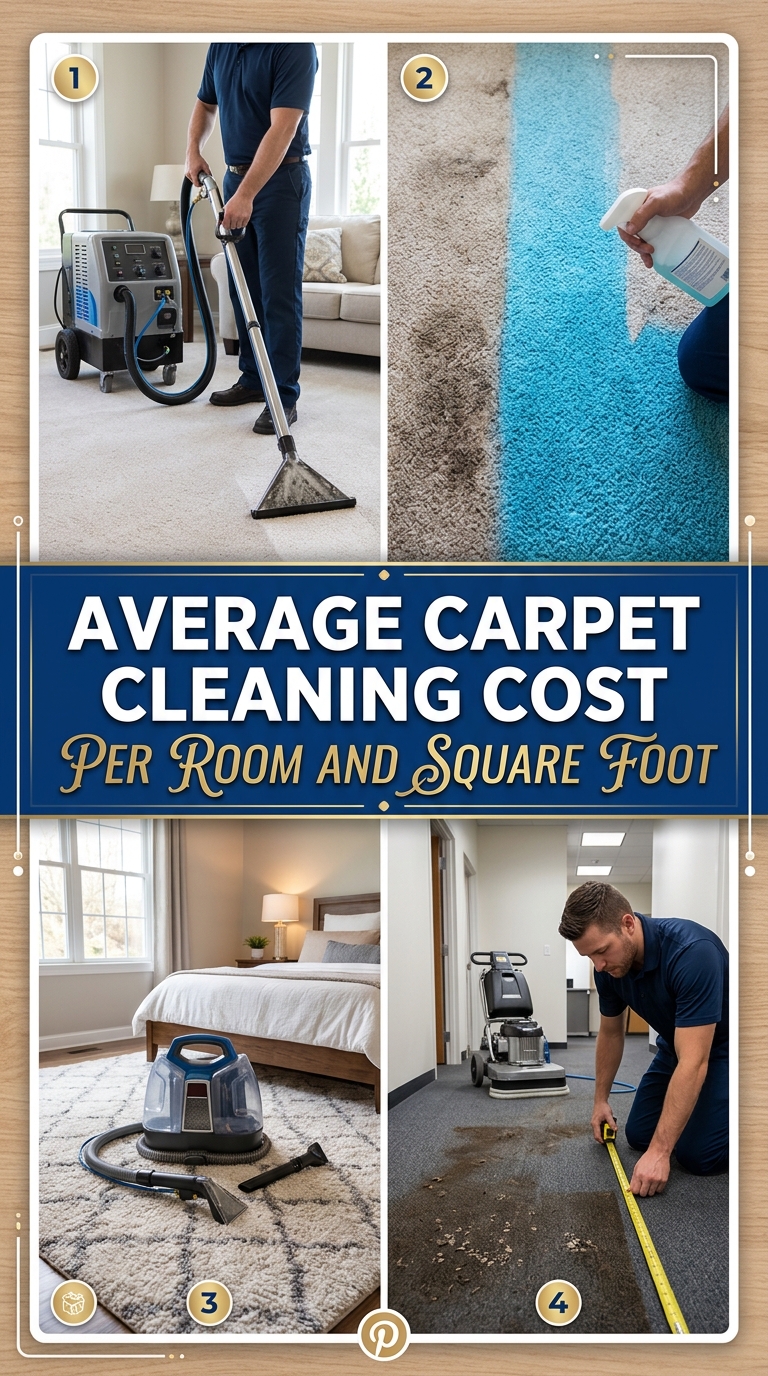
The average carpet cleaning cost per room and square foot typically ranges from $25 to $75 per room or $0.20 to $0.50 per square foot. Most homeowners pay between $120 and $235 for a standard professional service, though deep stains or large layouts can easily push prices higher. Understanding these variables helps you avoid overpaying.
| Product | Best For | Key Features | Pros | Cons |
|---|---|---|---|---|
| Bissell Big Green Professional | Heavy-Duty Cleaning | Extra-large brush roll, 1.75-gallon tank | Commercial power, fast drying | Very heavy to carry |
| Hoover SmartWash+ Automatic | Ease of Use | Automatic mixing, push-to-wash/pull-to-dry | Simple operation, lightweight | Smaller water tank |
| Bissell ProHeat 2X Revolution | Pet Owners | HeatBlast technology, specialized pet tools | Removes deep odors, maneuverable | Can be loud |
| Rug Doctor Mighty Pro X3 | High Traffic Areas | Vibrating brush technology, large capacity | Professional results, durable build | Industrial design is bulky |
| Bissell Little Green | Small Spaces | Portable design, 48-ounce tank | Affordable, easy to store | Not for full rooms |
1. Bissell Big Green Professional Carpet Cleaner
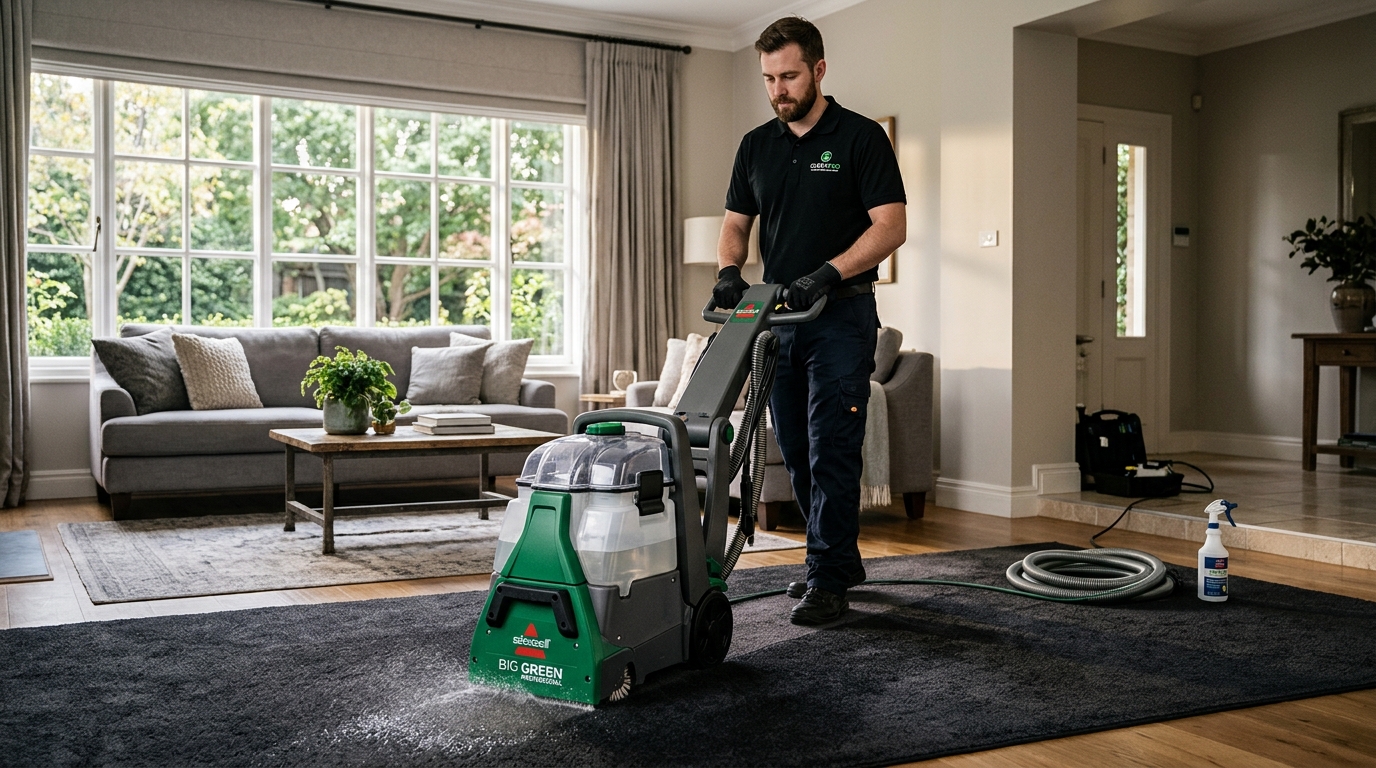
If you want to stop paying professional services every six months, this is the machine that justifies its price tag. It is a beast that mimics the commercial units you rent at the grocery store but with better suction and build quality. Most consumer machines feel like toys once you have pushed this around a living room. It focuses on raw power rather than flashy digital screens, making it a reliable workhorse for a household with constant foot traffic.
Performance & Build Quality
The build quality is noticeably superior to standard uprights, using thick plastics and a reinforced handle. The cleaning path is wide, and the motor provides enough lift to pull water from the deepest layers of the carpet pad. This means your floors do not stay soggy for twelve hours; usually, they are dry to the touch in about four. The rotating DirtLifter PowerBrush does more than just scrub; it agitates the fibers to release grit that standard vacuums leave behind.
Real-World Experience
In a typical scenario like a Sunday afternoon cleanup after a family gathering, this machine handles a 300-square-foot room in about twenty minutes. You will spend more time filling and emptying the tanks than actually scrubbing because the capacity is so large. Owners often mention that while it is heavy to haul up a flight of stairs, the results are indistinguishable from a professional van-mounted service. A common complaint is that the machine is difficult to store in small closets due to its footprint.
Ease of Use & Value for Money
While it is heavier than a standard vacuum, the design makes it easy to push once it is on the carpet. The dual tanks keep clean and dirty water completely separate, and the flow indicator tells you exactly when you need more solution. Regarding value, it pays for itself after about three whole-house cleanings. If you have a large home with wall-to-wall carpeting, the savings over professional rates are massive.
Who Should Buy It (and Who Should Skip)
- Best For: Homeowners with large floor plans, families with multiple pets, and those who want professional-grade results.
- Main Features: Large 1.75-gallon tanks, 10.5-inch cleaning path, 25-foot cord.
- Pros: Incredible suction power, long-lasting durability, cleans in both forward and backward passes.
- Cons: Extremely heavy (over 40 pounds empty), difficult to maneuver in tight corners.
This is the gold standard for home carpet cleaning if you can handle the weight. It eliminates the need for professional scheduling and pays for itself within the first year of ownership.
2. Hoover SmartWash+ Automatic Carpet Cleaner
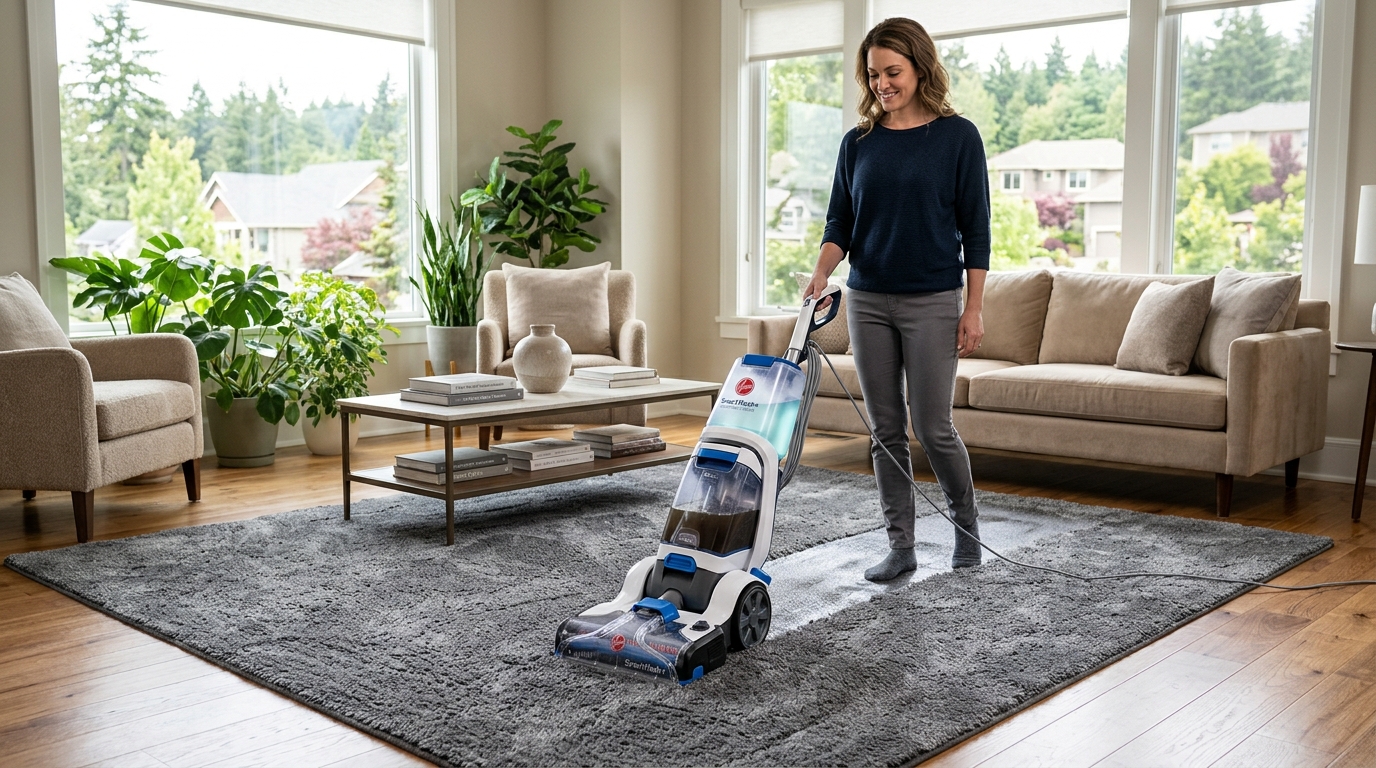
Most people hate carpet cleaning because mixing chemicals and managing triggers is a hassle. This machine removes the guesswork by automating the entire process. You push forward to wash and pull back to dry. There are no triggers to squeeze and no measuring cups to worry about. It is the closest thing to a “set it and forget it” experience you can find in floor care, making it perfect for someone who just wants the job done without a learning curve.
Performance & Build Quality
The cleaning performance is surprisingly strong for a machine that feels so light. It uses FlexForce PowerBrushes that are gentle enough for plush carpets but stiff enough to lift matted hair. The build is more “consumer-grade” than the Big Green, which means it is easier to carry but might not survive a fall down the stairs. The automatic mixing feature ensures you never use too much soap, which is the leading cause of “crunchy” carpets after cleaning.
Real-World Experience
Imagine you have an unexpected guest coming over and the hallway looks dingy. You can grab this machine, fill the water tank, and finish the area in ten minutes. Users frequently report that the “Dry Only” mode is a lifesaver, as it allows you to pass over the carpet multiple times to suck up every drop of moisture. A common complaint is that the pet hair can sometimes clog the nozzle, requiring you to pop the plastic cover off to clear it out manually.
Ease of Use & Value for Money
This is arguably the easiest machine on the market to operate. Because it handles the soap-to-water ratio automatically, you don’t waste expensive cleaning solution. The value is high for smaller homes or apartments where storage is at a premium. It fits in a standard coat closet and weighs about half as much as commercial-style units.
Who Should Buy It (and Who Should Skip)
- Best For: Busy parents, elderly users who need something lightweight, and people who hate complicated settings.
- Main Features: Auto-mix technology, Auto-dry sensors, removable nozzle.
- Pros: No triggers to squeeze, very lightweight, excellent drying speed.
- Cons: Tanks are smaller and require frequent refilling, less effective on 20-year-old deep stains.
If you avoid cleaning your carpets because the process seems too difficult, this machine solves that problem entirely. It makes maintenance so easy that you will actually do it more often.
3. Bissell ProHeat 2X Revolution Pet Pro
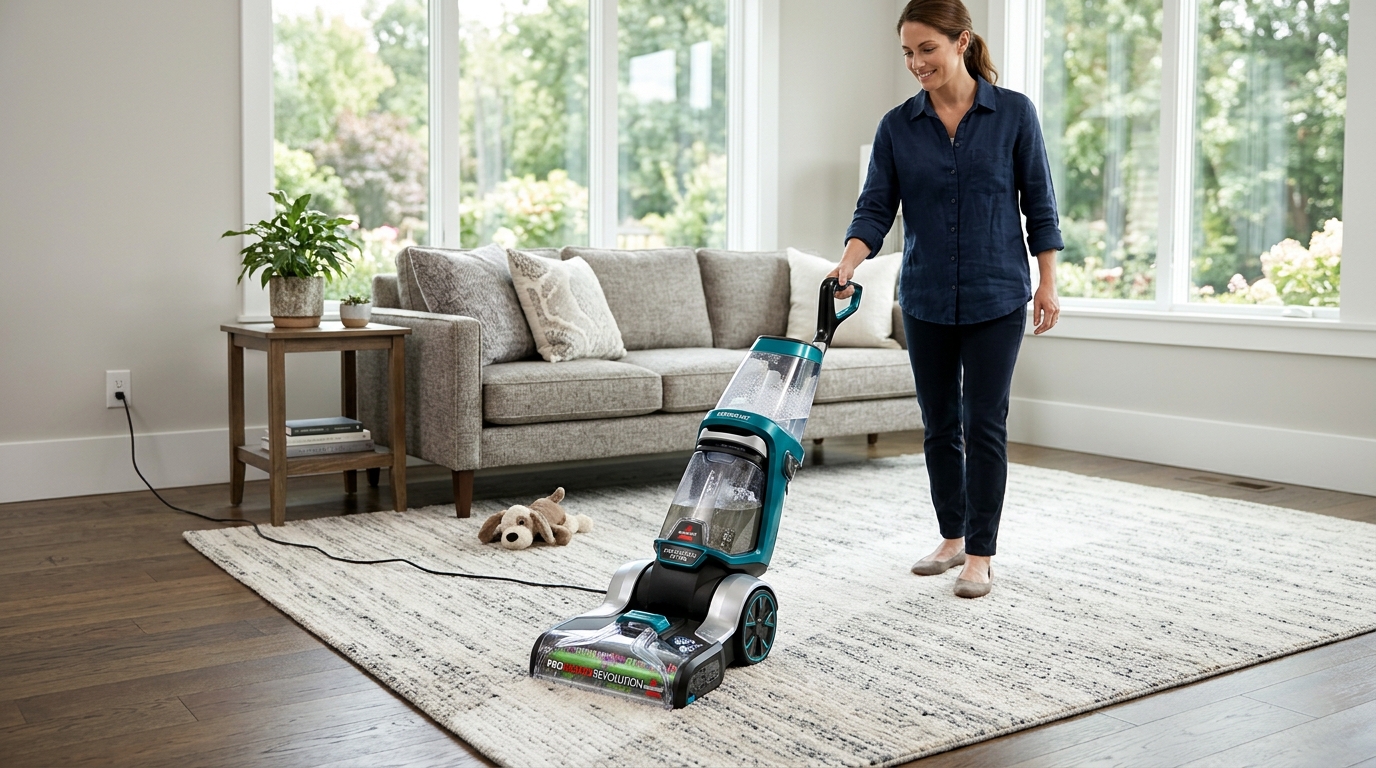
This machine is specifically engineered for the unique challenges of pet ownership, from embedded fur to biological accidents. It bridges the gap between a lightweight upright and a heavy commercial machine. The low-profile foot allows it to slide under furniture where pet dander usually hides, and the specialized “CleanShot” pre-treater lets you target specific spots with a concentrated blast of formula before you even start the main pass.
Performance & Build Quality
The dual brush rolls are the star of the show here. They rotate in opposite directions to agitate fibers from multiple angles. It features a “Max Clean” mode for deep-seated filth and an “Express Clean” mode that leaves carpets dry in about an hour. The build is sturdy but agile, and the hose attachment is actually powerful enough to clean upholstery or carpeted stairs without losing much suction.
Real-World Experience
For a household with a golden retriever or a cat, the amount of hair this pulls out—even after vacuuming—is shocking. Owners often mention how the specialized pet tool prevents hair from wrapping around the brush roll, which is a massive time-saver. However, users report that the machine can be quite loud, so it is not something you want to use while someone is trying to sleep. It is highly effective at removing the “dog smell” that lingers in high-traffic areas.
Ease of Use & Value for Money
It is easy to assemble and the tanks are simple to latch. The value proposition here is in its versatility; it works just as well on a flight of stairs as it does on a flat living room floor. It is priced mid-range, offering a better balance of power and weight than almost anything else in its category.
Who Should Buy It (and Who Should Skip)
- Best For: Households with shedding pets, people with allergies, and those who need to clean stairs frequently.
- Main Features: CleanShot Pre-treater, 2-in-1 Pet Upholstery Tool, dual brush rolls.
- Pros: Excellent stain removal, maneuverable around furniture, multiple cleaning modes.
- Cons: Loud motor, the dirty water tank can be a bit finicky to rinse clean.
If your carpets are a magnet for pet hair and odors, this is the most logical investment you can make. It handles the “gross” stuff with ease and keeps your home smelling fresh.
4. Rug Doctor Mighty Pro X3
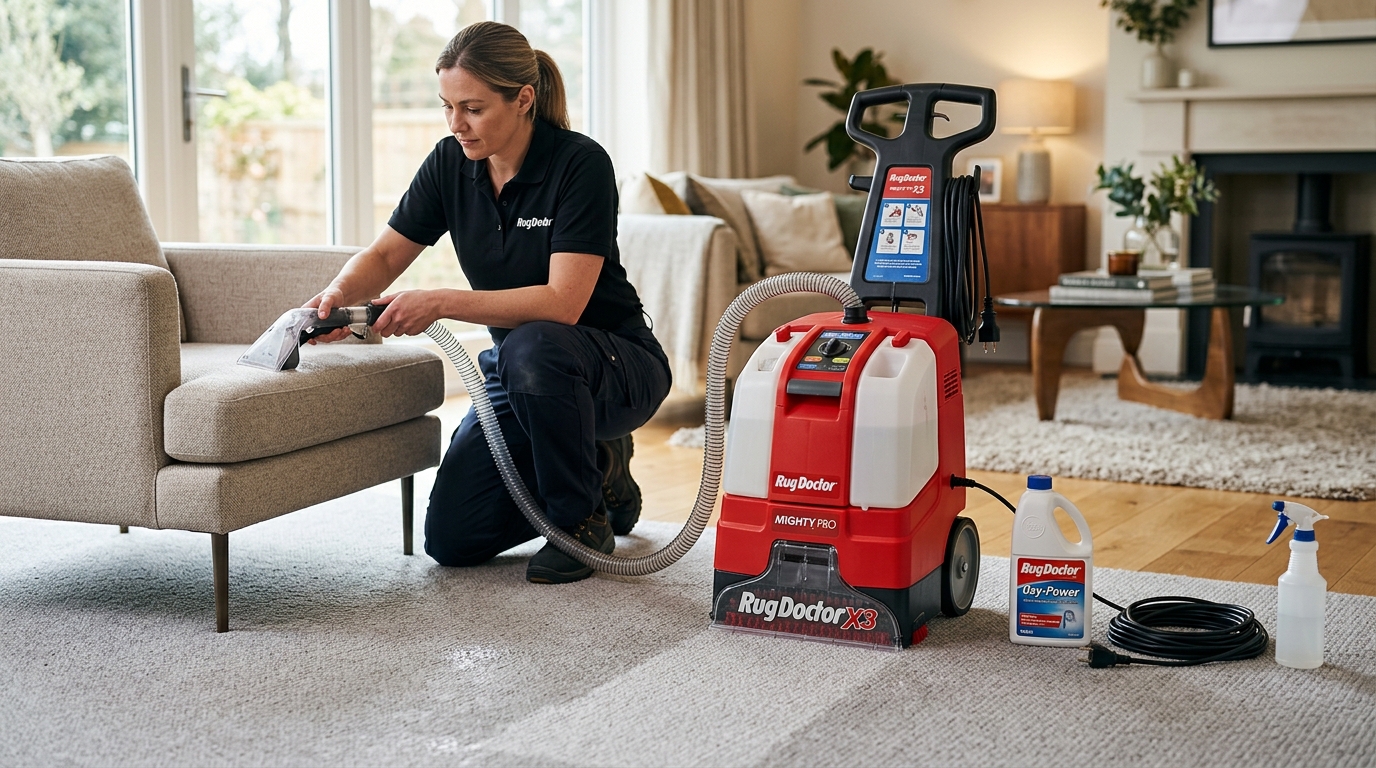
This is the iconic “red machine” you see in stores, but owning it means you get a much cleaner, better-maintained version than the rentals. It uses a vibrating brush rather than a rotating one, which some experts argue is better for delicate carpet fibers. It is designed to be pulled backward, which feels counterintuitive at first but allows you to apply your body weight for deeper extraction. It is a no-frills, high-durability tool meant for heavy use.
Performance & Build Quality
The Mighty Pro X3 is built like a tank. It uses a triple-action brush that vibrates 3,200 times per minute to scrub every side of the carpet fiber. The suction is incredibly consistent across the entire width of the vacuum head. It doesn’t have the “turbo” modes or fancy lights of newer machines because it doesn’t need them; the motor is powerful enough to handle anything from coffee spills to muddy footprints in one pass.
Real-World Experience
When cleaning a large basement or a rental property, this machine is unmatched. It can run for hours without overheating. Users frequently report that the large tank capacity means they can clean an entire large bedroom without stopping once. The main drawback is the ergonomics; pulling a heavy machine backward for an hour is a workout for your back and shoulders. It is not a machine for a quick 5-minute cleanup.
Ease of Use & Value for Money
The setup is basic: fill the bottom with water and soap, and you are ready. While it is more expensive than many uprights, it is built to last for decades rather than years. If you have a high-square-footage home or manage rental properties, this machine is a genuine asset that saves thousands in professional fees over its lifetime.
Who Should Buy It (and Who Should Skip)
- Best For: Large homes, landlords, and people who prefer commercial-grade tools over consumer gadgets.
- Main Features: Vibrating brush technology, large recovery tank, professional-grade motor.
- Pros: Incredible durability, consistent suction, large water capacity.
- Cons: Heavy and awkward to move, pulling backward can be tiring.
For those who value longevity and raw cleaning power over “smart” features, the Rug Doctor is the most reliable choice available. It is a one-time purchase that solves carpet issues for years.
5. Bissell Little Green Portable Carpet Cleaner
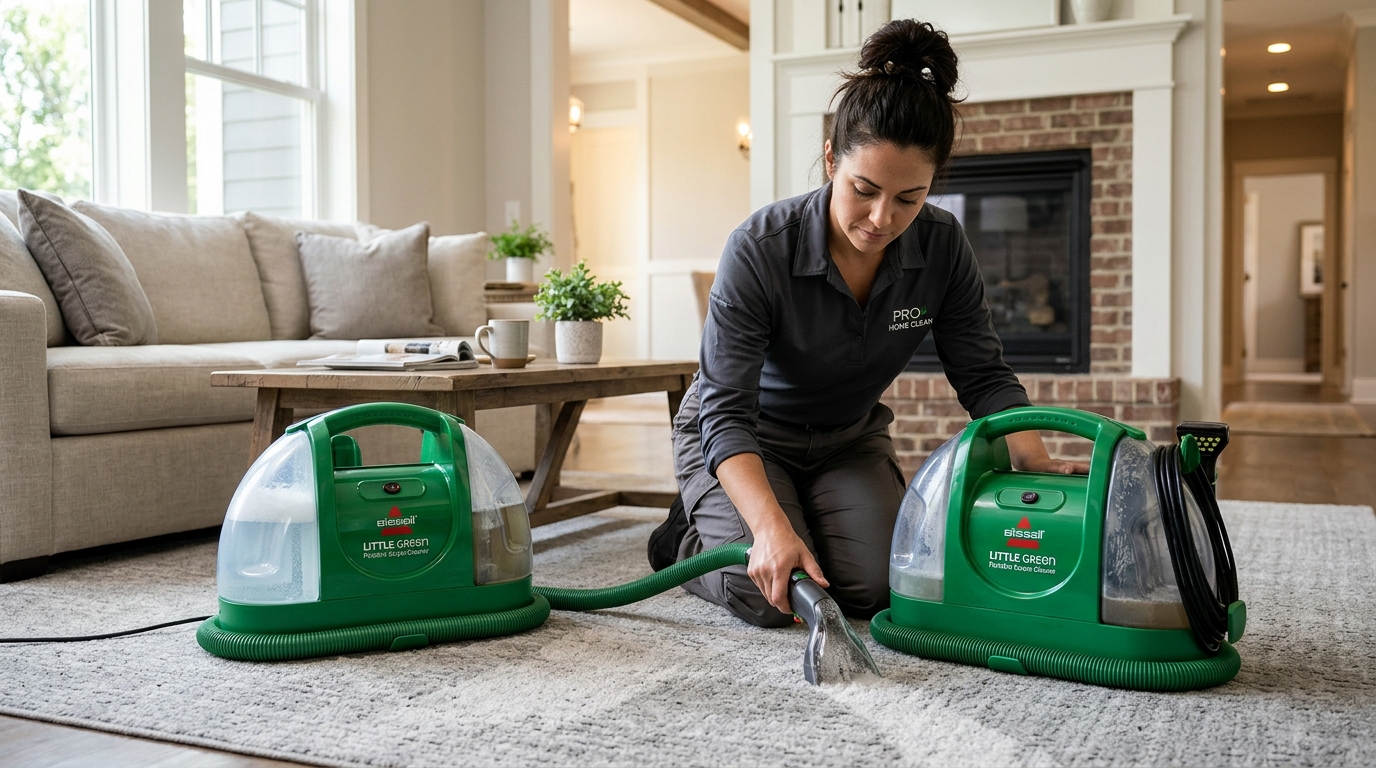
Not everyone needs to clean a whole house; sometimes you just need to fix a wine spill or clean your car’s floor mats. This is the most famous spot cleaner for a reason: it is tiny, effective, and cheap. It isn’t meant for wall-to-wall cleaning, but for targeted “surgery” on specific stains, it is much faster and more effective than scrubbing by hand with a rag and a spray bottle. It is the perfect companion to a standard vacuum.
Performance & Build Quality
Despite its small size, the suction is powerful enough to pull liquid out of thick rugs. It doesn’t have a motorized brush, so you have to provide the scrubbing motion yourself with the handheld tool. The build is compact and lightweight, making it easy to store under a sink or in a small laundry room. The tanks are small, but they are perfectly sized for cleaning up after a single pet accident or a spilled bowl of cereal.
Real-World Experience
This is the machine you grab when the cat throws up on the rug at 10:00 PM. You can be cleaned up and finished in three minutes. Owners often mention how helpful it is for car detailing, as it fits easily on a car seat to reach into footwells. A common complaint is that the hose is relatively short, so you have to keep the base unit very close to where you are scrubbing. It is also a bit of a chore to clean the dirty water tank if you let it sit too long.
Ease of Use & Value for Money
The value here is unbeatable. It costs a fraction of a full-sized machine and saves you from the frustration of permanent stains. It is the ultimate “emergency” tool. Anyone living in an apartment or a home with mostly hard floors and a few area rugs should own one of these.
Who Should Buy It (and Who Should Skip)
- Best For: Apartment dwellers, car enthusiasts, and people with kids or pets who make localized messes.
- Main Features: 48-ounce tank capacity, lightweight portable design, 15-foot cord.
- Pros: Very affordable, easy to store, great for upholstery and cars.
- Cons: Not for large areas, requires manual scrubbing, short hose.
Keep your rugs looking new without the bulk of a full-sized machine. This is the most cost-effective way to handle life’s little accidents before they become permanent eyesores.
Average Carpet Cleaning Cost Per Room and Square Foot
The average carpet cleaning cost per room and square foot is influenced by the cleaning method and the size of the area. Professional cleaners usually charge between $25 and $75 per room, while square foot pricing falls between $0.20 and $0.50. Larger homes often see a lower price per square foot but a higher total bill. Understanding these base rates helps you spot a fair quote from a miles away.
When companies quote by the room, they usually have a cap on the room size (often 200 to 300 square feet). If your “great room” is essentially three rooms in one, expect to pay for three rooms. Square foot pricing is more common for commercial spaces or very large residential projects because it is more precise. For a typical 1,500-square-foot home, you might see a flat rate of $300 to $500 depending on your location and the level of staining.
Choosing between these two pricing models often depends on your home’s layout. If you have many small rooms, per-room pricing is usually the better deal. If you have a large, open-concept floor plan with minimal wall divisions, square foot pricing might save you money. Always ask if “rooms” include hallways and closets, as some companies count these as half-rooms while others include them for free.
Factors That Change the Total Price
Carpet cleaning costs are rarely just the base rate because variables like stairs, furniture, and stain types add complexity. Stairs typically cost $2 to $5 per step, while moving heavy furniture can add a flat fee of $50 or more. Specialty treatments for pet odors or deep wine stains often require more expensive chemicals, which adds to the final invoice.
Stairs are labor-intensive because the technician cannot use the large floor machine and must switch to hand tools. This takes time, and time is money. Similarly, if a technician has to move your sofa, dining table, and bed, you are paying for the labor of two people rather than one. Most homeowners save $50 to $100 just by moving their own light furniture before the crew arrives.
Stain type also matters. A standard steam clean is great for general dirt, but protein-based stains (like pet accidents) or oil-based stains (like makeup) require pre-treatment. These “boosters” can add $20 to $50 to the bill. If you have a significant odor problem, a deodorizer treatment is usually an optional add-on that many companies offer for a flat fee per house or per room.
Professional Cleaning vs. Buying a Machine
Professional carpet cleaning costs roughly $150 to $400 per visit, whereas buying a high-end machine costs between $150 and $600 as a one-time investment. If you clean your carpets more than once a year, owning a machine pays for itself in less than 12 months. However, professionals have truck-mounted suction that home machines simply cannot match for deep extraction.
The trade-off is between convenience and power. A professional service uses high-heat steam (around 200 degrees) which sanitizes and breaks down grease better than the lukewarm water in most home units. If you are moving out of a rental and need a receipt to get your deposit back, you must hire a professional. If you just want to keep your home smelling fresh and handle spills as they happen, buying a machine like the Bissell Big Green is the smarter financial move.
Consider your lifestyle. If you have a toddler and two dogs, your carpets will likely need attention every 3 months. In that scenario, paying a professional $200 four times a year is $800. Buying a top-tier machine for $400 saves you $400 in the first year alone. If you are a single person with no pets and you only clean once every two years, hiring a pro is the better choice to avoid storing a bulky machine.
Comprehensive Buying Guide
Know Your Carpet Type
Before you spend a dime, identify what your carpet is made of. Synthetic fibers like nylon and polyester are durable and can handle the high heat and heavy scrubbing of most machines. However, natural fibers like wool or silk are much more delicate. If you use a high-heat steam cleaner on a wool rug, you might shrink it or damage the fibers permanently. Always check the manufacturer’s tag or test a small, hidden corner first.
The Difference Between Steam and Dry Cleaning
Steam cleaning (hot water extraction) is the most common method. It shoots hot water and soap into the fibers and then sucks it back out. It is the most effective for deep cleaning but has the longest dry time. Dry cleaning uses a chemical foam or powder and very little water. It is great for delicate carpets or when you need to walk on the floor immediately, but it doesn’t clean as deeply as steam.
Common Mistakes to Avoid
The biggest mistake is using too much soap. Whether you hire a pro or do it yourself, excess soap leaves a sticky residue that actually attracts dirt faster. Your carpet might look great for a week, but it will turn gray quickly as it traps dust. Another mistake is over-wetting. If the carpet stays wet for more than 24 hours, you risk mold and mildew growth in the padding. Use fans and open windows to speed up the process.
Budgeting for Maintenance
Don’t wait until the carpet looks “dirty” to clean it. Dirt is like sandpaper; every time you walk on it, it grinds down the carpet fibers. Once those fibers are frayed, no amount of cleaning will bring back the original sheen. A good rule of thumb is to vacuum twice a week and deep clean every 6 to 12 months. This maintenance schedule can double the lifespan of your carpet, saving you thousands in replacement costs later.
Frequently Asked Questions
Is professional carpet cleaning worth the extra money?
Professional cleaning is worth it for deep-set stains or when you need a “reset” for your home’s air quality. Their truck-mounted systems provide higher heat and stronger suction than any home unit. However, for regular maintenance in a busy house, owning a machine is far more cost-effective.
How long does it take for carpets to dry?
Most carpets dry within 6 to 12 hours after a professional steam clean, though it can take up to 24 hours in humid conditions. Using a home machine with a “dry mode” can reduce this to 2 to 4 hours. Avoid walking on damp carpets with shoes, as they will transfer dirt instantly.
Does carpet cleaning remove all stains?
No, some stains are actually “burns” or permanent discolorations of the fiber. Bleach, certain dyes, and old pet stains can be permanent. A professional can often improve the look, but they cannot always restore the original color. Be wary of any company that guarantees 100% stain removal.
Should I vacuum before the carpet cleaners arrive?
Yes, you should always vacuum thoroughly before deep cleaning. Removing loose hair, dust, and crumbs allows the carpet cleaner to focus on the dirt embedded deep within the fibers. Most professionals expect the floor to be pre-vacuumed, though some include it as a service for an extra fee.
Can carpet cleaning get rid of fleas or dust mites?
Steam cleaning is highly effective at killing fleas, larvae, and dust mites due to the high temperature of the water. However, it may not kill all the eggs. If you have an active infestation, you should combine professional cleaning with a targeted pest control treatment for the best results.
How much does it cost to clean a 1,500 sq ft house?
For a 1,500-square-foot house, expect to pay between $300 and $500 for a professional service. This assumes about 1,000 square feet of actual carpeted area, as bathrooms and kitchens are usually excluded. If you buy your own machine, your only cost is the electricity and the cleaning solution.
Which carpet cleaner is best for your home?
Choosing the right approach to carpet cleaning depends entirely on your floor plan and your tolerance for chores. If you have a large home and want the best possible results without the recurring cost of a service, the Bissell Big Green is the clear winner for its sheer power. For those who want something easier to move and automate, the Hoover SmartWash+ offers the best user experience. If you are primarily dealing with pet messes and stairs, the Bissell ProHeat 2X Revolution Pet Pro is the most versatile tool for the job. Landlords and those with massive carpeted areas will find the most value in the Rug Doctor Mighty Pro X3, while apartment dwellers should stick with the Bissell Little Green for small spots. Investing in the right tool today means you never have to worry about a surprise cleaning quote again.
