
Cleaning a rug feels like a high-stakes gamble because one wrong chemical can permanently bleach expensive wool or make synthetic fibers feel strangely sticky. Safe rug cleaners for wool and synthetic fibers must be pH-neutral and free of harsh bleaches; look for products with the WoolSafe certification for natural fibers and low-residue formulas for synthetics. Woolite InstaClean and Folex are industry standards that balance safety with effective stain removal across most common household rug materials.
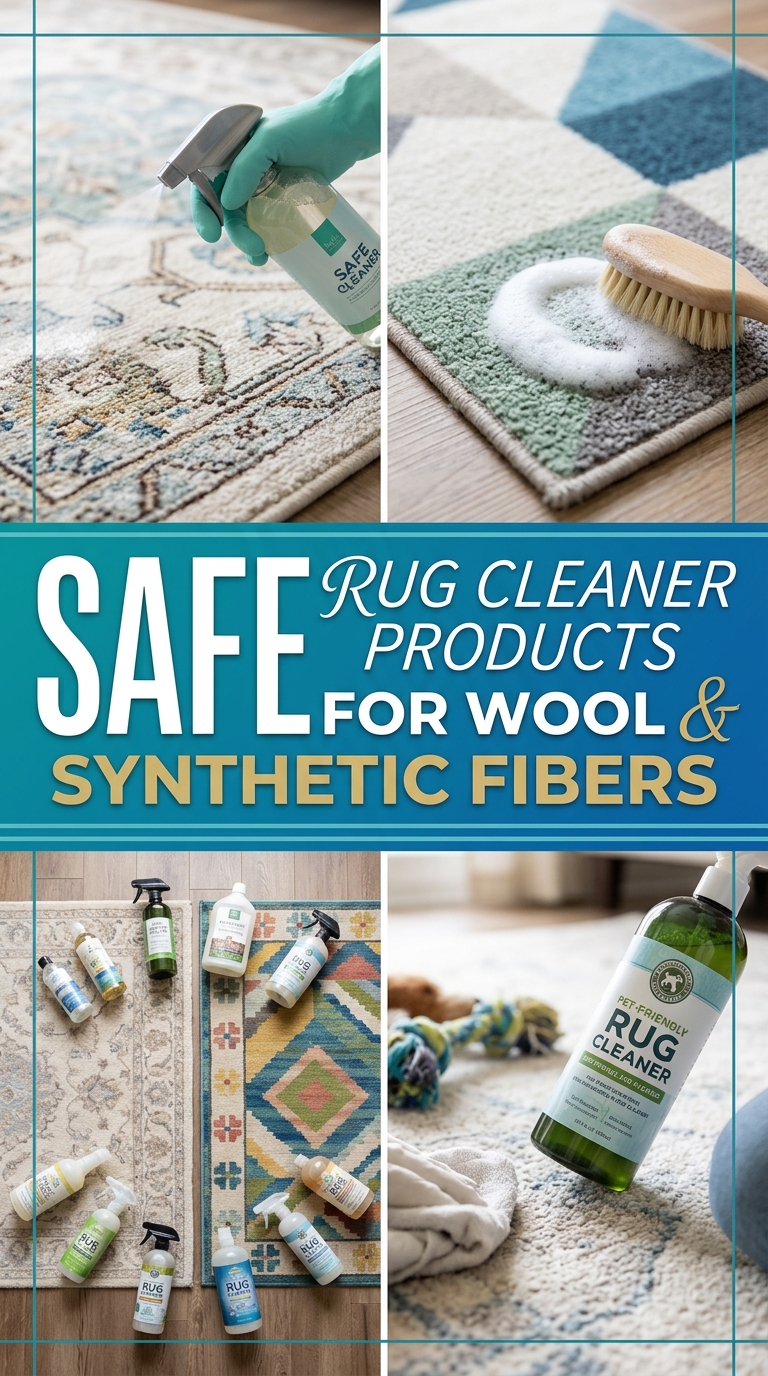
| Product | Best For | Key Features | Pros | Cons |
|---|---|---|---|---|
| Bissell Woolite InstaClean | All-around Safety | WoolSafe Certified, oxygen-based | Safe for wool, works in 30 seconds | Strong scent for some |
| Folex Carpet Spot Remover | Synthetic Rugs | Water-based, no rinsing required | Non-toxic, leaves no residue | Needs testing on wool |
| Rocco & Roxie Stain & Odor | Pet Messes | Enzymatic formula, deep penetration | Clears organic odors, very safe | Requires wait time |
| TriNova Natural Rug Cleaner | Plant-based Cleaning | Organic ingredients, gentle formula | Safe for kids/pets, soft finish | Not for heavy oil stains |
| Zep High Traffic Cleaner | Large Synthetic Areas | Concentrated, professional grade | Great value, lifts heavy dirt | Too harsh for pure wool |
1. Bissell Woolite InstaClean Permanent Stain Remover
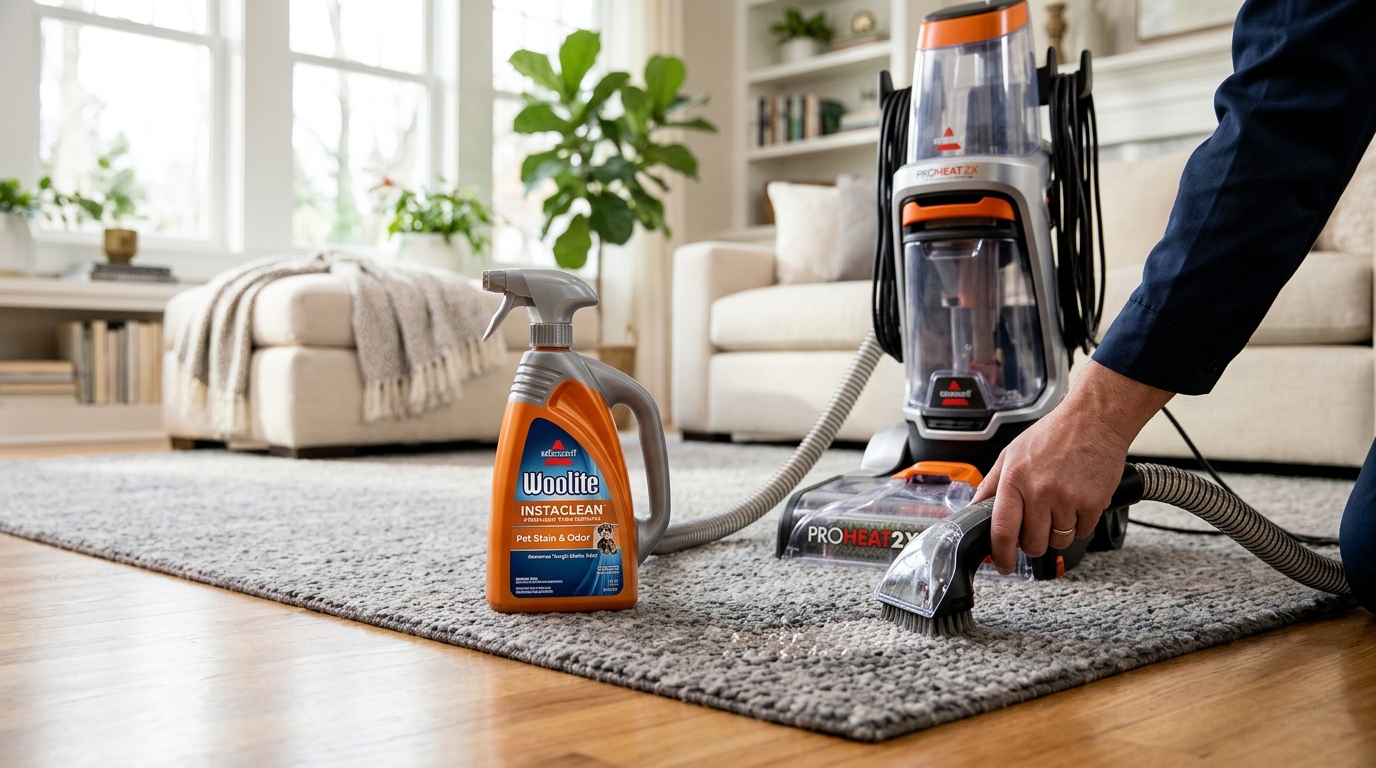
This is the most reliable “safe bet” for wool owners who do not want to overthink the chemistry of their cleaning products. Many people panic when they spill wine or coffee on a light-colored rug, and this spray is designed to stop that panic by working on contact. It targets the pigments in the stain without attacking the protein structure of the wool fibers themselves, which is a common problem with cheaper, more acidic cleaners. It balances the need for a deep clean with the delicate nature of natural materials, making it a staple for any multi-rug household.
Performance & Build Quality
The formula relies on an oxygen-based cleaning agent that physically lifts stains to the surface rather than just bleaching them white. For synthetic fibers like nylon or polyester, it acts as a powerful surfactant that breaks the bond between the dirt and the plastic-based strand. The spray nozzle provides a consistent mist that does not over-saturate the rug, which is critical for wool because excess moisture can lead to browning or a musty smell if it does not dry quickly enough. The build quality of the bottle is sturdy, and the trigger mechanism rarely clogs, even after months of storage.
Real-World Experience
Imagine it is a Tuesday evening and a glass of red wine tips over onto your favorite hand-tufted wool rug. Owners often mention that this spray works almost instantly, showing visible lifting of the color within 30 seconds. In a different scenario, like a hallway runner made of synthetic polyester that sees constant foot traffic, users frequently report that it removes the “graying” look that happens over time. A common complaint, however, is the scent; it has a traditional “laundry clean” smell that can be overwhelming in small, poorly ventilated rooms. To live with this, it is best to crack a window or turn on a fan for ten minutes after use.
Ease of Use & Value for Money
You do not need to be a professional to use this correctly; you just spray, wait, and blot. There is no scrubbing required, which protects the rug from fraying or pilling. Considering the cost of professional rug cleaning, keeping a bottle of this on hand is a massive money saver. It provides a level of peace of mind that is worth the small investment, especially since it is certified by the WoolSafe organization, meaning it has passed independent laboratory tests for safety on natural fibers.
Who Should Buy It (and Who Should Skip)
- Best For: Owners of wool, nylon, and polyester rugs who want one product that handles everything safely.
- Main Features: WoolSafe certified, oxygen-based, permanent stain removal, no-scrub formula.
- Pros: Extremely fast results, safe for delicate natural fibers, widely available.
- Cons: Scent can be strong, not meant for large-scale machine cleaning.
Skip it if: You are looking for a completely scent-free or 100% plant-based organic formula, as this uses standard household chemicals to achieve its speed.
Overall Verdict
This product is the industry gold standard for spot cleaning because it removes the guesswork. If you have an expensive wool rug and you are scared of ruining it, this is the safest place to start. It fixes the problem of accidental spills before they become permanent eyesores.
2. Folex Carpet Spot Remover
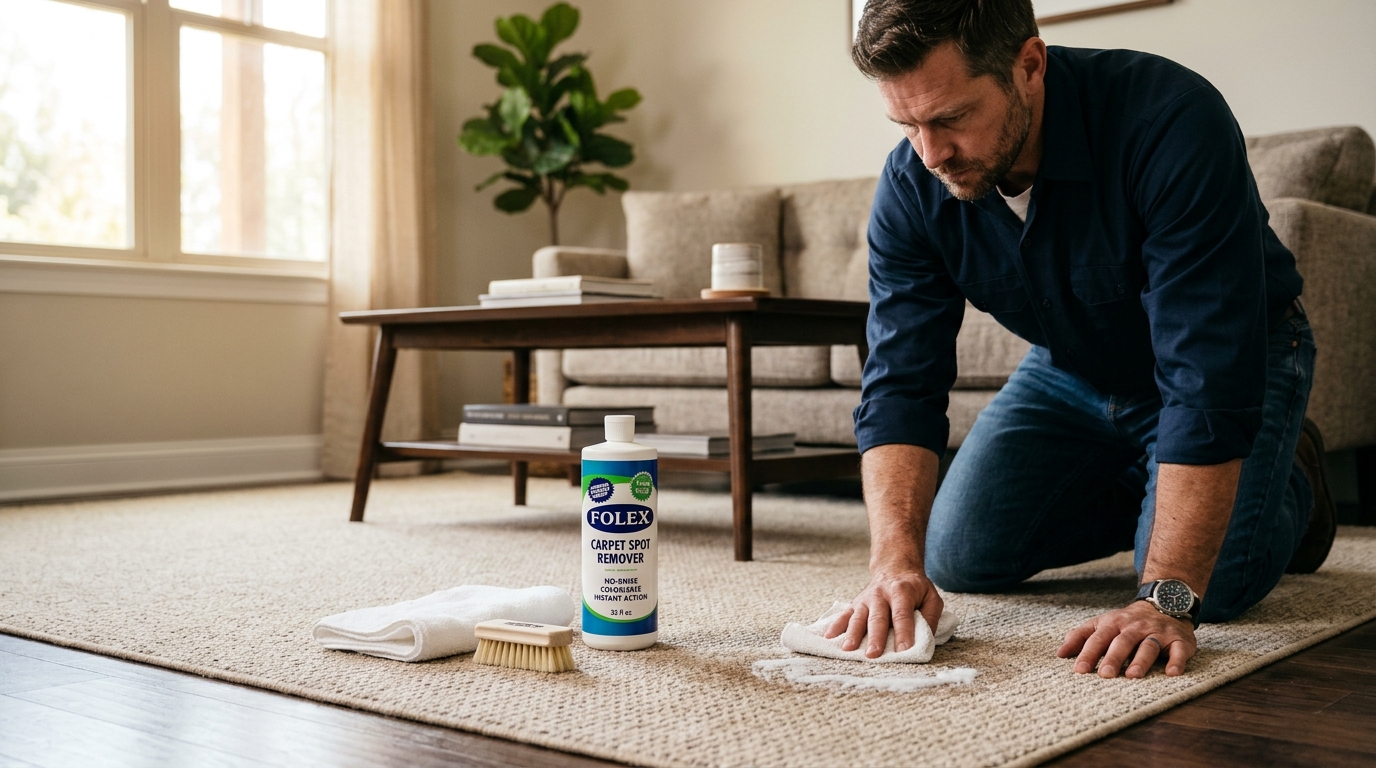
If you have a synthetic rug with a tough mystery stain, this is the first thing you should reach for. Folex has a cult following because it feels and looks like water, yet it manages to vanish stains that have been sitting for weeks. It is an aqueous-based cleaner that uses a non-ionic surfactant, which is a fancy way of saying it does not leave behind a sticky residue. This is the most important feature for synthetic rugs, which often attract dirt faster after they have been “cleaned” because of leftover soap. Folex avoids this entirely.
Performance & Build Quality
The performance of Folex is almost confusingly good. It does not use solvents, bleaches, or enzymes, yet it works on grease, ink, and old food stains. On synthetic fibers like polypropylene, it works by emulsifying the stain so it can be blotted away with a paper towel. On wool, it is generally considered safe because it is pH-neutral, but because it is so powerful, you should always do a small patch test first to ensure your specific rug dyes are stable. The bottle is a large, no-frills container that offers significantly more product for the price than most competitors.
Real-World Experience
In a busy kitchen with a synthetic rug, a grease splatter or a dropped piece of fruit can be a nightmare. Users frequently report that Folex makes these spots disappear without even needing to rub the area. A common scenario involves discovering an old stain from a previous tenant or a hidden corner; owners often mention that Folex can revive these areas even after other cleaners have failed. However, a common complaint is that it may take a few applications for very deep, set-in stains. Since it is water-based, you have to be patient and let the area dry between attempts to see the true result.
Ease of Use & Value for Money
This is perhaps the easiest cleaner on the market to use because it requires no rinsing. You spray it on, agitate it gently with your fingertips, and blot it up. The value for money is exceptionally high because the bottle size is generous and you don’t need a lot of liquid to see results. It is a workhorse product that belongs in every laundry room, especially for those with large areas of synthetic carpeting or rugs.
Who Should Buy It (and Who Should Skip)
- Best For: Removing old or mystery stains on synthetic rugs and high-traffic area carpets.
- Main Features: No-rinse formula, non-ionic surfactant, odor-free, non-flammable.
- Pros: Leaves zero residue, safe for most surfaces, incredible value for the volume.
- Cons: Not WoolSafe certified (though often safe), can take multiple passes on oil.
Skip it if: You have a very antique or fragile wool rug with unstable vegetable dyes, as you may prefer a cleaner specifically labeled for wool safety.
Overall Verdict
Folex is the “miracle” cleaner for a reason. It is the best choice for anyone dealing with stubborn stains on synthetic fibers who wants a residue-free finish. If you are tired of cleaners that leave a crunchy or sticky spot on your rug, this is the solution.
3. Rocco & Roxie Stain & Odor Eliminator
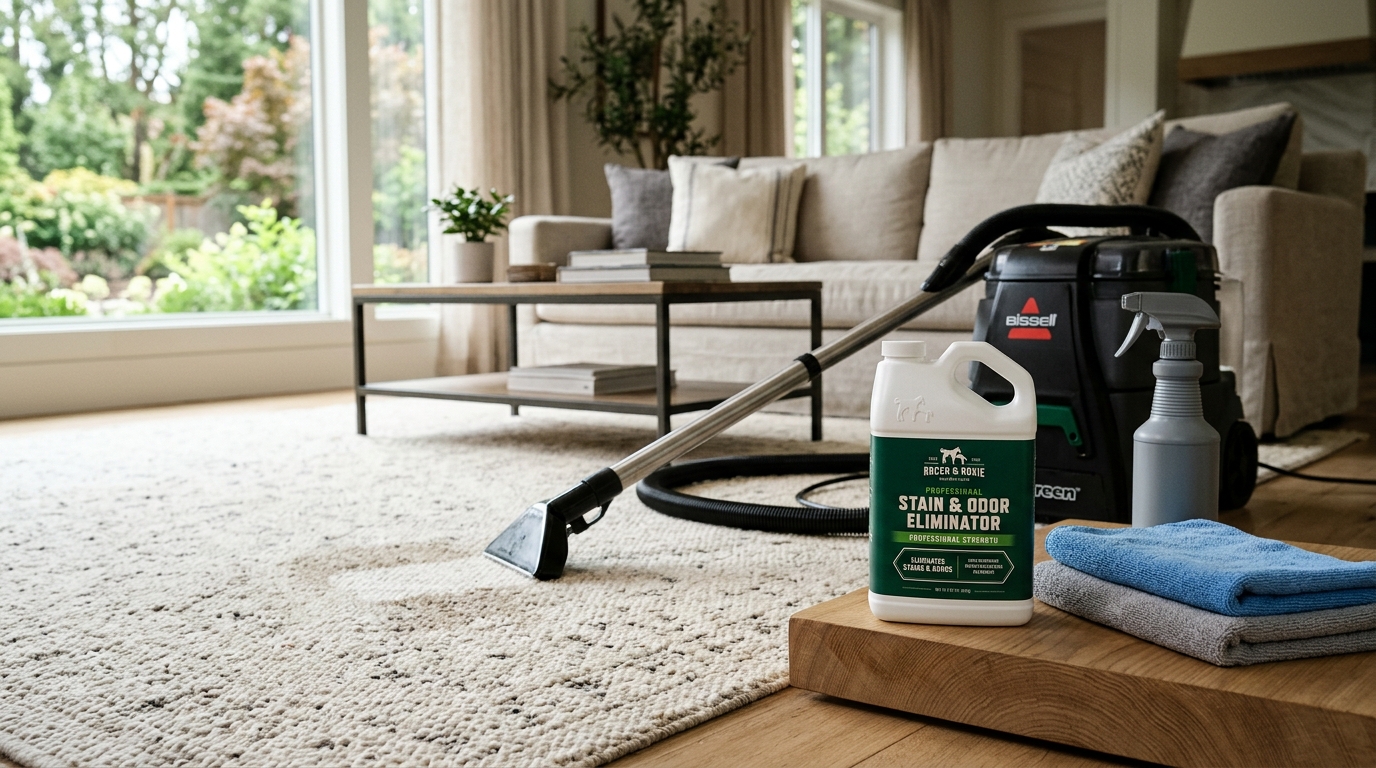
This is the best enzymatic option for households with pets where wool and synthetic rugs live together. Most pet cleaners are either too weak to work or too harsh for wool, but this formula strikes a careful balance. It uses professional-grade enzymes that actually “eat” the organic matter—like urine or vomit—rather than just masking the smell with perfume. This is vital for wool rugs because wool is a natural protein fiber that can trap odors deep within its core. This cleaner goes in after the odor at a molecular level.
Performance & Build Quality
The enzyme action in Rocco & Roxie is triggered by moisture. When you spray it on a wool or synthetic rug, the bacteria-producing enzymes activate and start breaking down the proteins and starches in the stain. This is a slower process than a chemical bleach, but it is much safer for the long-term health of the rug. The liquid is clear and the bottle features a high-output sprayer that allows for deep saturation, which is sometimes necessary for pet accidents that have soaked through to the rug backing.
Real-World Experience
Imagine a first-time puppy owner dealing with an accident on a synthetic rug in the living room. Owners often mention that this is the only product that truly removes the scent so the pet doesn’t return to the same spot. In a scenario involving a wool rug, users frequently report that it doesn’t cause the yellowing that often happens with ammonia-based cleaners. A common complaint is the wait time; for the enzymes to work, you often have to leave it for 30 to 60 minutes or even overnight under a damp towel. It is not an “instant” fix, but it is a “permanent” fix.
Ease of Use & Value for Money
While it requires more patience than a simple spray-and-wipe product, it is still very easy to use. The instructions are clear: soak, wait, and blot. In terms of value, it is slightly more expensive per ounce than budget cleaners, but because it prevents you from having to replace a rug ruined by pet smells, it pays for itself almost immediately. It is also safe to use around children and pets once it has dried, which is a major concern for many families.
Who Should Buy It (and Who Should Skip)
- Best For: Pet owners dealing with organic stains and odors on both natural and synthetic fibers.
- Main Features: Enzymatic formula, Chlorine-free, color-safe, Carpet and Rug Institute (CRI) certified.
- Pros: Eliminates odors permanently, very safe for family homes, effective on old stains.
- Cons: Requires long dwell times for best results, has a distinct initial “clove-like” smell.
Skip it if: You are only dealing with non-organic stains like ink, grease, or dirt, as enzymes are specifically designed for biological messes.
Overall Verdict
If you have pets and rugs, you simply need this bottle. It is the most effective way to protect the investment you made in your wool or synthetic rugs from the inevitable accidents of life with animals. It solves the problem of lingering smells that other cleaners leave behind.
4. TriNova Natural Carpet & Rug Cleaner
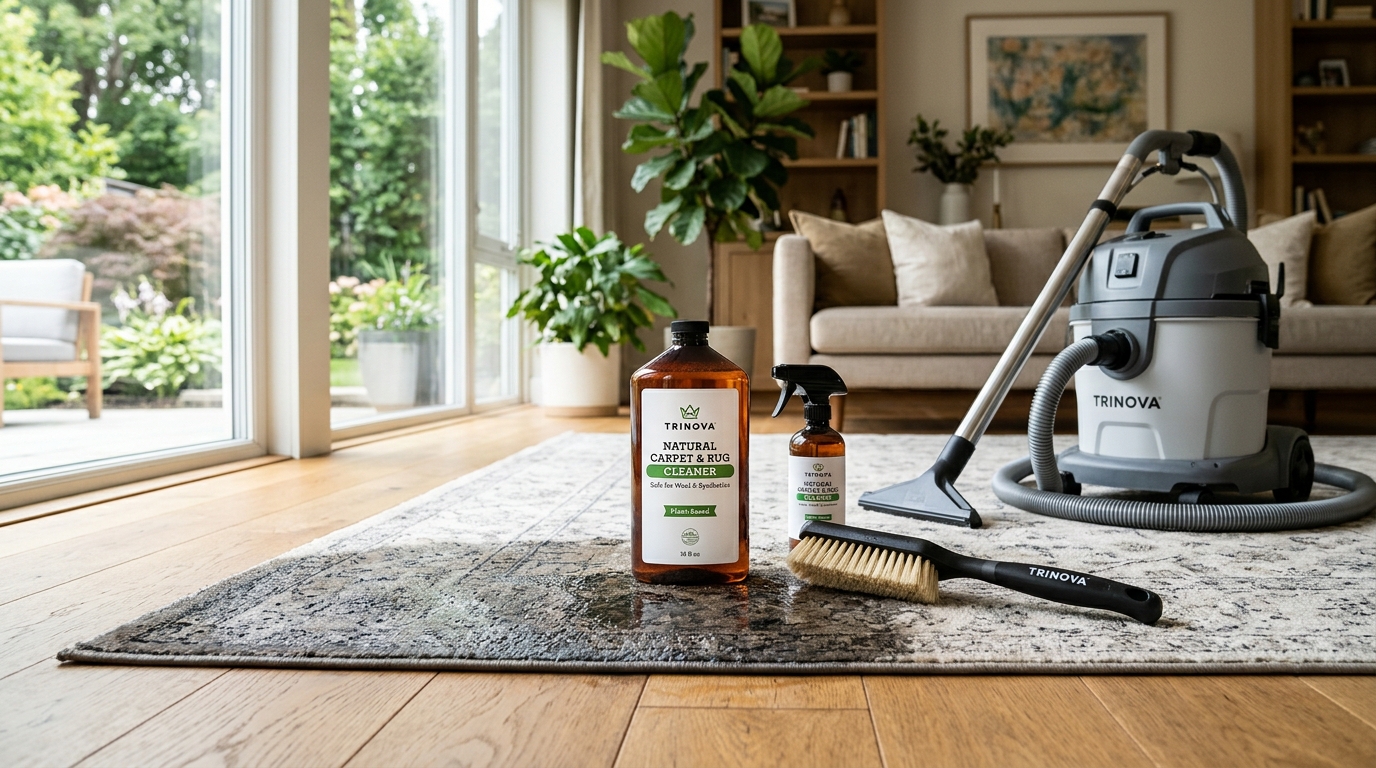
Choose this if you prefer plant-based ingredients without sacrificing the ability to lift dirt from delicate wool. Many “green” cleaners are unfortunately ineffective, leaving you with a wet rug and a still-visible stain. TriNova is different because it uses a concentrated blend of plant-derived surfactants that mimic the power of traditional chemicals. It is exceptionally gentle, making it a favorite for high-end wool rugs where the owner is nervous about using anything synthetic or harsh. It leaves the fibers feeling soft rather than stiff.
Performance & Build Quality
TriNova performs well on common household dirt and food spills. Because it is plant-based, it has a naturally lower pH, which is exactly what wool fibers need to stay vibrant and strong. On synthetic rugs, it works by breaking the surface tension of the stain, allowing it to be absorbed into a cloth. The bottle design is modern and ergonomic, and the formula is biodegradable. It doesn’t use the aggressive foaming agents found in many commercial sprays, which means it is much easier to blot up without leaving a soapy ring behind.
Real-World Experience
For a parent with a toddler crawling on a synthetic rug, the ingredients in a cleaner matter just as much as the performance. Owners often mention the peace of mind they get knowing their child isn’t touching harsh residues. In another scenario, an owner of a delicate vintage wool rug might use this for general freshening; users frequently report that it leaves the wool feeling “conditioned” and soft. A common complaint is that it isn’t strong enough for heavy oil-based stains like motor grease or thick makeup. You may need to apply it twice for these types of heavy-duty problems.
Ease of Use & Value for Money
It is as simple to use as any other spot cleaner. You spray the area, let it sit for a minute, and blot. The value is solid because a little bit goes a long way, and it comes with a high-quality microfiber cloth in many kits, which helps with the blotting process. While it costs a bit more than the most basic supermarket brands, the specialized plant-based formula justifies the price for those who prioritize non-toxic living.
Who Should Buy It (and Who Should Skip)
- Best For: Health-conscious families and owners of delicate wool rugs who want a gentle, non-toxic option.
- Main Features: Plant-based ingredients, soap-free, biodegradable, safe for all fiber types.
- Pros: No chemical smell, leaves fibers soft, very safe for skin contact.
- Cons: Struggles with heavy oils, slightly more expensive than synthetic cleaners.
Skip it if: You are dealing with industrial-strength stains or need the absolute fastest chemical reaction possible.
Overall Verdict
TriNova is the best “worry-free” cleaner on the list. It provides a high level of safety for both the rug and the people living on it. If you want a clean home without the chemical footprint, this is the product to buy.
5. Zep High Traffic Carpet Cleaner
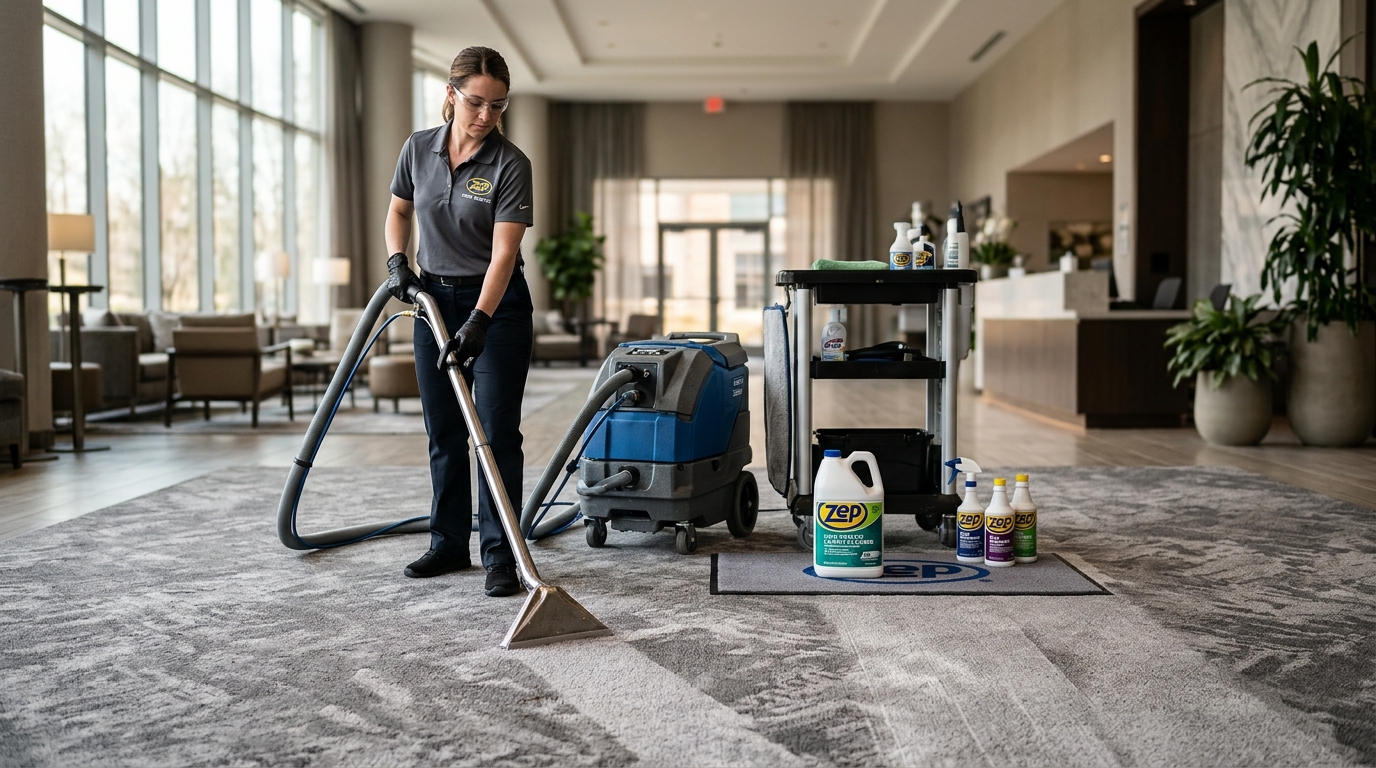
This is the high-performance choice for large synthetic rug areas that need a deep machine clean or a pre-treatment for heavy foot traffic. Zep is a brand usually found in the kits of professional cleaners, and this formula is designed to cut through the compacted dirt that builds up in the doorways of synthetic rugs. It is a concentrated formula, meaning it is incredibly cost-effective for people with a lot of square footage to cover. It is the heavy hitter of the group, meant for the toughest jobs.
Performance & Build Quality
Zep works by using powerful surfactants that penetrate deep into the “twists” of synthetic fibers like nylon. It is particularly good at removing the dullness caused by outside dirt being tracked in over months. While it is excellent for synthetics, you must be careful with wool; this is a more alkaline cleaner, so it should only be used on wool if it is heavily diluted and tested first, or avoided on wool entirely if you have a safer alternative. The bottle is a standard industrial-style spray that is built to withstand heavy use in a garage or large household.
Real-World Experience
In a home with a large synthetic area rug in the mudroom or entryway, dirt can become embedded. Owners often mention that Zep is the only thing that gets the “pathway” look out of the rug. Users frequently report using it as a pre-treatment before running a carpet cleaning machine, which significantly improves the final result. A common complaint is that if you use too much, it can be difficult to rinse out because it is so concentrated. To avoid this, always start with a light mist and only add more if the stain is not moving.
Ease of Use & Value for Money
This product is very easy to use but requires a bit more respect for the instructions than a “natural” cleaner. You need to ensure you blot it thoroughly. The value for money is unbeatable; for the price of a small bottle of “boutique” cleaner, you get a large bottle of industrial-strength liquid that lasts a very long time. It is the best budget choice for maintaining large synthetic rugs on a regular basis.
Who Should Buy It (and Who Should Skip)
- Best For: Synthetic rugs in high-traffic areas and as a pre-treatment for machine cleaning.
- Main Features: Professional strength, concentrated formula, enzymes for stain lifting.
- Pros: Very cheap per use, removes deep-seated dirt, works on large areas.
- Cons: Not the safest for pure wool, requires careful rinsing, industrial scent.
Skip it if: You only have small wool rugs or are sensitive to traditional cleaning chemical smells.
Overall Verdict
For large-scale maintenance of synthetic rugs, Zep is the clear winner. It offers professional-level results at a fraction of the cost. If your main goal is to get a dingy synthetic rug looking like new again, this is your best option.
Finding the right rug cleaner starts with identifying your fiber.
Natural fibers like wool are fundamentally different from synthetic fibers like nylon, polyester, or polypropylene. Wool is a protein-based fiber that can be damaged by high-alkalinity (high pH) cleaners, which cause the fibers to become brittle and yellow. Synthetic fibers are essentially plastics; they are much more durable but have a tendency to hold onto oil-based stains and can be ruined by heat or “sticky” residues that attract new dirt. A safe cleaner must respect these differences to avoid permanent damage.
Check the pH level for wool safety
The most important factor for wool is the pH level. Ideally, a wool cleaner should have a pH between 5.5 and 8.0. If a cleaner is too alkaline (above 8.5), it can strip the natural lanolin from the wool, causing it to lose its soft feel and stain-resistant properties. Many “all-purpose” cleaners are highly alkaline to cut through grease, which is why they are often dangerous for wool. Always look for the WoolSafe logo or a specific mention of pH-neutrality on the bottle if you are cleaning natural fibers.
Avoid optical brighteners and bleach
Many laundry and carpet cleaners include “optical brighteners.” These are chemicals that stay in the fiber and reflect light to make the rug look cleaner than it actually is. On synthetic rugs, these are usually fine, but on wool, they can cause permanent yellowing over time that cannot be reversed. Similarly, never use oxygen bleaches in high concentrations or chlorine bleaches on wool, as they will literally dissolve the fiber. For synthetics, oxygen bleach is generally safe and very effective at removing organic stains.
The “Sticky Residue” trap in synthetic rugs
Synthetic fibers like polyester are naturally oleophilic, meaning they love oil. When you use a cleaner that contains a lot of soap or “surfactants” and you don’t rinse it out perfectly, that soap stays on the fiber. Because the soap is designed to catch dirt, it will continue to do its job long after you are finished cleaning. This is why a cleaned spot often turns dark and dirty again within a week. To avoid this, choose low-residue or no-rinse cleaners like Folex, which dry to a powder or evaporate completely.
Common rug cleaning mistakes to avoid
- Scrubbing too hard: Never scrub a rug. This distorts the fibers (especially wool) and creates “fuzzing” or pilling that cannot be fixed. Always blot.
- Over-wetting: Wool can hold a lot of water without feeling wet. If the backing gets soaked, it can shrink or develop “cellulosic browning,” which leaves brown rings on the surface.
- Ignoring the test patch: Even “safe” cleaners can react with certain dyes. Always test a hidden corner first.
- Using hot water on wool: Hot water can shrink wool fibers. Use lukewarm or cool water instead.
How to maintain your rugs for longevity
Regular maintenance is more important than deep cleaning. For synthetic rugs, vacuuming twice a week prevents dirt from acting like sandpaper and wearing down the plastic fibers. For wool, vacuum with the beater bar turned off or set to a high level to avoid pulling out the natural fibers. Spot clean spills immediately before they have a chance to set into the core of the yarn. If a rug is deeply soiled, professional cleaning every 12 to 18 months is recommended to remove the grit that household vacuums cannot reach.
Frequently Asked Questions
Is it safe to use dish soap on a wool rug?
Only if the dish soap is extremely mild and pH-balanced, but it is generally not recommended. Most dish soaps are designed to strip grease and have a high pH, which can damage wool fibers and leave a sticky residue that attracts more dirt. A dedicated wool-safe cleaner is a much safer investment for long-term rug health.
Can I use a steam cleaner on wool rugs?
No, you should generally avoid using high-heat steam cleaners on wool rugs. Excessive heat can cause wool to shrink or lose its natural shape, and the high moisture can lead to mold or browning in the backing. If you use a carpet machine, ensure it uses lukewarm water and has a powerful extraction motor to remove as much moisture as possible.
How do I tell if my rug is wool or synthetic?
You can check the label first, but if it is missing, you can perform a “burn test” on a tiny, hidden fiber. Clip a single strand and light it with a match; wool will smell like burning hair and turn into a crumbly black ash. Synthetic fibers like nylon or polyester will smell like burning plastic and melt into a hard, clear or brown bead.
Why did my rug turn brown after I cleaned it?
This is usually “cellulosic browning,” which happens when the rug stays wet for too long. Moisture wicks up from the rug’s backing (which often contains jute or cotton) and brings brown lignin to the surface. To prevent this, use less water when cleaning and use fans to dry the rug as quickly as possible after spot cleaning.
Are “natural” rug cleaners actually effective?
Yes, many modern plant-based cleaners use surfactants derived from coconut or corn that are very effective at breaking down surface dirt. While they may struggle with heavy industrial grease compared to chemical solvents, they are more than adequate for most household spills and are much safer for the fibers and your family.
Do I really need to blot instead of scrub?
Yes, blotting is the only way to remove a stain without damaging the texture of the rug. Scrubbing pushes the stain deeper into the fibers and twists the yarn, causing permanent fraying. By blotting with a clean, white cloth, you transfer the stain from the rug into the cloth through capillary action.
Which safe rug cleaner is right for you?
The best rug cleaner depends entirely on whether you are protecting a delicate investment or maintaining a high-traffic family space. If you want the safest overall choice for both wool and synthetic fibers, the Bissell Woolite InstaClean is the clear winner for its certification and speed. For those dealing with heavy stains on synthetic rugs who want the best value, Folex Carpet Spot Remover is an essential tool. If pet odors are your main concern, Rocco & Roxie is the most effective choice, while TriNova is the go-to for those who prioritize plant-based, non-toxic ingredients. Finally, for large synthetic areas that need deep cleaning, Zep High Traffic Cleaner offers the best professional-grade results.
